Reading guide
Austrian Economics Books: A Reading Guide and Citation Map
The Austrian school began in Vienna in 1871, when Carl Menger argued that value comes from the judgments of individual people rather than from labor or production costs. Later writers built on that idea to explain prices, money, capital and business cycles as the result of choices people make with limited knowledge.
The books below are ordered so each one prepares you for the next. Under every book you will see the works its author drew on, so you can follow the ideas back to their sources.
Opens a new “Austrian Economics” canvas you can keep, rename or delete.
Step 1
Principles of Economics
Carl Menger · 2007
The founding text. Menger explains value through individual needs and marginal choices, the starting point for everything that follows.
Explore in BookommendWhat it cites
 System der Volkswirthschaft · Wilhelm RoscherMenger dedicated his book to Roscher, continually engaging with his historical economic formulations.View
Principles of Political Economy and Taxation · David RicardoDirectly challenged Ricardo's labor theory of value, substituting subjective marginal utility.View
Staatswirthschaftliche Untersuchungen · Friedrich von HermannHeavily cited throughout Menger's pioneering classification of goods of different orders.View
The Wealth of Nations · Adam SmithMenger critiques Smith's emphasis on the division of labor and objective cost theories of value.View
Where to read & listen
Step 2
Economics in One Lesson
Henry Hazlitt · 2010
The most readable introduction. Hazlitt shows how to look past a policy's visible effects to its hidden costs, in short chapters with everyday examples.
Explore in BookommendWhat it cites
 The Wealth of Nations · Adam SmithCited to support core free-market principles, trade, and the division of labor.View
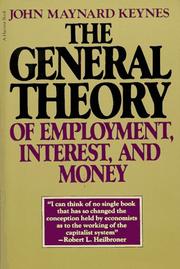 The General Theory of Employment, Interest and Money · John Maynard KeynesCritiqued extensively throughout the book as the source of many popular economic fallacies.View
What Is Seen and What Is Not Seen · Frédéric BastiatServes as the primary theoretical foundation for Hazlitt's main thesis on unseen economic consequences.View
 The Road to Serfdom · Friedrich HayekAlso in this guide · Step 3Referenced regarding the dangers of state planning and central economic control.View
Where to read & listen
Step 3
The Road to Serfdom
Friedrich A. Hayek · 1969
Hayek's best-known book, written during World War II, argues that central economic planning tends to erode personal and political freedom.
Explore in BookommendWhat it cites
 Liberty and the News · Lord ActonActon's dictums on power and freedom strongly inform Hayek's warnings against state authority.View
 Das Kapital · Karl MarxServes as the primary ideological target for Hayek's critique of socialist planning.View
Democracy in America · Alexis de TocquevilleCited for warnings regarding democratic despotism and the subtle loss of individual liberty.View
The Wealth of Nations · Adam SmithServes as a foundational economic text for Hayek's arguments on spontaneous order and market mechanisms.View
Where to read & listen

Step 4
Human Action
Ludwig von Mises · 1966
Mises's full treatise. Long and demanding, it builds economics from the logic of purposeful action and makes the case that socialism cannot calculate prices.
Explore in BookommendWhat it cites
Das Kapital · Karl MarxMises explicitly critiques Marxian socialism, historical materialism, and the labor theory of value.View
Principles of Economics · Carl MengerAlso in this guide · Step 1Mises builds his entire subjectivist praxeological framework on Menger's foundational economic theory.View
Capital and Interest · Eugen von Böhm-BawerkMises heavily draws upon Böhm-Bawerk's theories of time preference and capital structure.View
Where to read & listen
Step 5
Man, Economy, and State
Murray N. Rothbard · 2009
Rothbard's systematic restatement of Mises, covering production, money and interest step by step. A good companion or alternative to Human Action.
Explore in BookommendWhat it cites
Prices and Production · Friedrich A. HayekCited for its structural analysis of capital goods and the Austrian theory of the trade cycle.View
The Theory of Money and Credit · Ludwig von MisesFormulates the monetary theory, regression theorem, and business cycle analysis expanded upon by Rothbard.View
- Human Action · Ludwig von MisesAlso in this guide · Step 4Serves as the primary theoretical foundation and direct inspiration for Rothbard's comprehensive treatise.View
Where to read & listen
Step 6
The Fatal Conceit: The Errors of Socialism
Friedrich Hayek · 2011
Hayek's last book. It argues that markets, morals and language grew through evolution rather than design, and that planners overestimate what they can know.
Explore in BookommendWhat it cites
A Treatise of Human Nature · David HumeSupplies the philosophical defense of evolved property conventions and the critical limits of human reason.View
The Open Society and Its Enemies · Karl PopperCritiques historicism and utopian social engineering while defending open, non-coercive social orders.View
Socialism: An Economic and Sociological Analysis · Ludwig von MisesPresents the original economic calculation problem demonstrating the impossibility of socialist central planning.View
Where to read & listen
Other perspectives
Many economists dispute the school's rejection of mathematical models and statistical testing, and its views on money and business cycles remain contested. Reading Keynes's General Theory or Samuelson alongside these books gives a fuller picture.
Citations are suggested by AI and not verified against the full text. This page may contain affiliate links. We may earn from qualifying purchases at no additional cost to you.
Opens a new “Austrian Economics” canvas you can keep, rename or delete.