Author
M. Mitchell Waldrop
2 books in the library · referenced in 1 book
Explore M. Mitchell Waldrop's worksBooks by M. Mitchell Waldrop
Complexity: The Emerging Science at the Edge of Order and Chaos
M. Mitchell Waldrop
The Dream Machine: J.C.R. Licklider and the Revolution That Made Computing Personal
M. Mitchell Waldrop
Showing 2 of 2 books
Books M. Mitchell Waldrop mentions & references
Cybernetics: Or Control and Communication in the Animal and the MachineNorbert WienerMentioned in 2 of their booksIn Complexity: The Emerging Science at the Edge of Order and Chaos: Historical foundation of cybernetics and feedback systems underlying modern complexity theory.In The Dream Machine: J.C.R. Licklider and the Revolution That Made Computing Personal: Provides the conceptual foundation of feedback and communication that shaped Licklider's early psychoacoustics research.Explore
- Explore
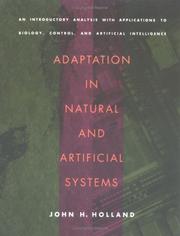 Adaptation in Natural and Artificial SystemsJohn H. HollandIn Complexity: The Emerging Science at the Edge of Order and Chaos: Foundational work on genetic algorithms and complex adaptive systems central to the Santa Fe Institute.
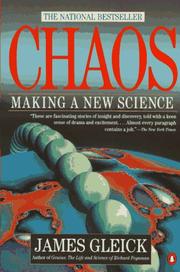 Chaos: Making a New ScienceJames GleickIn Complexity: The Emerging Science at the Edge of Order and Chaos: Precursor chronicle of nonlinear dynamics establishing the popular foundation for complexity science.Explore
- Explore
Computer Lib / Dream MachinesTheodor H. NelsonIn The Dream Machine: J.C.R. Licklider and the Revolution That Made Computing Personal: Reflects the radical countercultural enthusiasm for interactive personal computing ignited by early ARPA research.
- Explore
Hackers: Heroes of the Computer RevolutionSteven LevyIn The Dream Machine: J.C.R. Licklider and the Revolution That Made Computing Personal: Details the MIT AI Lab culture nurtured by research grants initiated during Licklider's tenure at ARPA.
- Explore
Machines Who ThinkPamela McCorduckIn The Dream Machine: J.C.R. Licklider and the Revolution That Made Computing Personal: Documents the rise of artificial intelligence, a field central to Licklider's early IPTO funding strategy.
- Explore
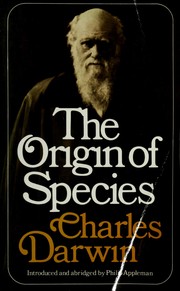 On the Origin of SpeciesCharles DarwinIn Complexity: The Emerging Science at the Edge of Order and Chaos: The foundational text on evolutionary theory informing Santa Fe's complex adaptive system models.
- Explore
Order Out of ChaosIlya Prigogine and Isabelle StengersIn Complexity: The Emerging Science at the Edge of Order and Chaos: Explores non-equilibrium thermodynamics and dissipative structures that inspire self-organization theories discussed by researchers.
- Explore
The Blind WatchmakerRichard DawkinsIn Complexity: The Emerging Science at the Edge of Order and Chaos: Discussed regarding natural selection mechanisms and computer simulations of biological evolution.
- Explore
The Closed World: Computers and the Politics of Discourse in Cold War AmericaPaul N. EdwardsIn The Dream Machine: J.C.R. Licklider and the Revolution That Made Computing Personal: Analyzes how military funding and Cold War priorities fostered the emergence of modern computer science.
- Explore
The Computer and the BrainJohn von NeumannIn The Dream Machine: J.C.R. Licklider and the Revolution That Made Computing Personal: Explores structural analogies between computing mechanisms and neural processes, influencing early psychoacoustics and cybernetics.
- Explore
The Computer from Pascal to von NeumannHerman H. GoldstineIn The Dream Machine: J.C.R. Licklider and the Revolution That Made Computing Personal: Provides historical background on early electronic digital computers preceding the interactive computing movement.
- Explore
The Mathematical Theory of CommunicationClaude E. Shannon and Warren WeaverIn The Dream Machine: J.C.R. Licklider and the Revolution That Made Computing Personal: Establishes information theory, deeply influencing post-war cognitive science and Licklider's thinking at MIT.
- Explore
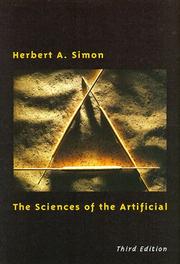 The Sciences of the ArtificialHerbert A. SimonIn Complexity: The Emerging Science at the Edge of Order and Chaos: Influential work on hierarchy and complex systems architecture framing interdisciplinary computational science.
The Soul of a New MachineTracy KidderIn The Dream Machine: J.C.R. Licklider and the Revolution That Made Computing Personal: Illustrates the intense engineering drive in minicomputer development following early timesharing breakthroughs.Explore
 The Structure of Scientific RevolutionsThomas S. KuhnIn Complexity: The Emerging Science at the Edge of Order and Chaos: Referenced to describe the scientific paradigm shift championed by the Santa Fe Institute founders.Explore
- Explore
 The Wealth of NationsAdam SmithIn Complexity: The Emerging Science at the Edge of Order and Chaos: Classical economic model contrasted with Brian Arthur's theories of increasing returns and positive feedback.
- Explore
Tools for Thought: The History and Future of Mind-Expanding TechnologyHoward RheingoldIn The Dream Machine: J.C.R. Licklider and the Revolution That Made Computing Personal: Traces the lineage of human-computer symbiosis pioneers from Licklider to modern personal computing.
- Explore
Transforming Computer Technology: Information Processing for the Pentagon, 1962-1986Arthur L. Norberg and Judy E. O'NeillIn The Dream Machine: J.C.R. Licklider and the Revolution That Made Computing Personal: Examines the institutional history of DARPA's Information Processing Techniques Office established by Licklider.
- Explore
What Is Life?Erwin SchrödingerIn Complexity: The Emerging Science at the Edge of Order and Chaos: Seminal exploration of physical systems resisting entropy, foundational to complexity definitions of life.
- Explore
Where Wizards Stay Up Late: The Origins of the InternetKatie Hafner and Matthew LyonIn The Dream Machine: J.C.R. Licklider and the Revolution That Made Computing Personal: Chronicles the ARPANET project catalyzed by Licklider's visionary sponsorship of interactive computer networking.
Books that mention & reference M. Mitchell Waldrop
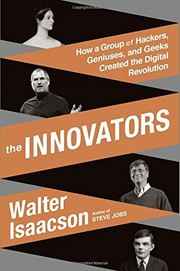
Showing 1 of 1 books