Author

Malcolm Gladwell
Malcolm Timothy Gladwell is a British-Canadian journalist, author, and public speaker. He has been a staff writer for The New Yorker since 1996. Wikipedia
7 books in the library · referenced in 10 books
Explore Malcolm Gladwell's worksBooks by Malcolm Gladwell
Blink
Malcolm Gladwell
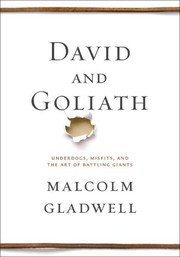
David and Goliath
Malcolm Gladwell
Outliers
Malcolm Gladwell
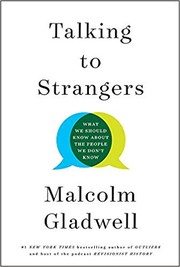
Talking to Strangers
Malcolm Gladwell
The Bomber Mafia
Malcolm Gladwell
The Tipping Point
Malcolm Gladwell
What the Dog Saw
Malcolm Gladwell
Showing 7 of 7 books
Books Malcolm Gladwell mentions & references
- Explore
Sources of Power: How People Make DecisionsGary KleinMentioned in 2 of their booksIn Blink: Explores how professionals make rapid, effective decisions in high-stakes environments using expert intuition.In What the Dog Saw: Referenced in discussions of intuitive decision-making and how experienced professionals recognize patterns under pressure.
- Explore
Telling Lies: Clues to Deceit in the Marketplace, Politics, and MarriagePaul EkmanMentioned in 2 of their booksIn Blink: Referenced in the discussion of micro-expressions and the involuntary facial signals that reveal concealed emotion.In Talking to Strangers: Discussed in relation to the facial coding system and the flawed assumption of human emotional transparency.
- Explore
Albion's Seed: Four British Folkways in AmericaDavid Hackett FischerIn Outliers: Used to trace the historical roots of the Appalachian 'culture of honor' back to British borderland migrants.
- Explore
America's Pursuit of Precision Bombing, 1910-1945Stephen L. McFarlandIn The Bomber Mafia: Traces the technical history and ideological hopes invested in the Norden bombsight.
- Explore
Beyond the Melting PotNathan Glazer and Daniel Patrick MoynihanIn Outliers: Referenced to explain the occupational niches and cultural adaptations of Jewish garment workers in New York.
- Explore
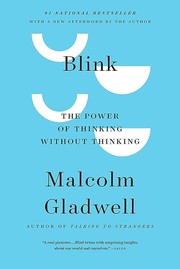 Blink: The Power of Thinking Without ThinkingMalcolm GladwellIn Talking to Strangers: Referenced implicitly and explicitly as Gladwell qualifies and complicates his earlier ideas about rapid snap judgments.
- Explore
Cesar's WayCesar MillanIn What the Dog Saw: Examined in the title essay to analyze nonverbal communication, dog behavior, and human interpersonal dynamics.
- Explore
Culture of Honor: The Psychology of Violence in the SouthRichard E. Nisbett and Dov CohenIn Outliers: Cited to demonstrate experimental evidence of how cultural legacies of honor persist across generations.
- Explore
Descartes' Error: Emotion, Reason, and the Human BrainAntonio DamasioIn Blink: Draws on neurological findings demonstrating that somatic markers and gut feelings are essential for rational decision-making.
- Explore
Diffusion of InnovationsEverett M. RogersIn The Tipping Point: Supplies the core framework of Innovators, Early Adopters, and the chasm required for an epidemic to spread.
- Explore
Divine Secrets of the Ya-Ya SisterhoodRebecca WellsIn The Tipping Point: Analyzed as a prime case study of word-of-mouth tipping among reading groups.
- Explore
 Doing Time on the Outside: Incarceration and Family Life in Urban AmericaDonald BramanIn David and Goliath: Drawn upon in the analysis of California's three-strikes law to explain how excessive punishment undermines legal legitimacy within communities.
- Explore
 Duped: Truth-Default Theory and the Social Science of Lying and DeceptionTimothy R. LevineIn Talking to Strangers: Provides the foundational theoretical framework for Gladwell's argument that humans naturally default to assuming honesty.
- Explore
Fixing Broken Windows: Restoring Order and Reducing Crime in Our CommunitiesGeorge L. Kelling and Catherine M. ColesIn The Tipping Point: Provides the foundational Broken Windows theory underpinning Gladwell's chapter on New York City's crime decline.
Fooled by RandomnessNassim Nicholas TalebIn What the Dog Saw: Gladwell profiles Taleb and explores his investment philosophy based on preparing for rare, unpredictable events.Explore
- Explore
Genetic Studies of GeniusLewis M. TermanIn Outliers: Analyzed extensively to demonstrate that exceptionally high IQ beyond a certain threshold does not guarantee real-world success.
- Explore
Grooming, Gossip, and the Evolution of LanguageRobin DunbarIn The Tipping Point: Explains Dunbar's number and the evolutionary limit of approximately 150 members in a cohesive group.
- Explore
Guilty by Reason of InsanityDorothy Otnow LewisIn What the Dog Saw: Served as the uncredited source material for a Broadway play, prompting Gladwell's meditation on intellectual property and plagiarism.
- Explore
 How the Weak Win Wars: A Theory of Asymmetric ConflictIvan Arreguín-ToftIn David and Goliath: Gladwell uses Arreguín-Toft's political science data to demonstrate how underdogs dramatically increase their odds of victory when employing unconventional strategies.
- Explore
Influence: The Psychology of PersuasionRobert B. CialdiniIn The Tipping Point: Referenced in analyzing the mechanisms behind Salesmen and persuasive nonverbal signaling.
- Explore
Iron Eagle: The Turbulent Life of General Curtis LeMayThomas M. CoffeyIn The Bomber Mafia: Serves as a primary biographical source on Curtis LeMay's military career and pragmatic warfighting philosophy.
- Explore
 LeMay: The Life and Wars of General Curtis LeMayWarren KozakIn The Bomber Mafia: Informs Gladwell's characterization of LeMay's unsentimental approach to ending the war as quickly as possible.
- Explore
 Lest Innocent Blood Be Shed: The Story of the Village of Le Chambon and How Goodness Happened TherePhilip HallieIn David and Goliath: Serves as the narrative foundation for the chapter detailing how Pastor André Trocmé and French Huguenot villagers resisted Nazi occupiers.
- Explore
Making Sense of the Troubles: The Story of the Conflict in Northern IrelandDavid McKittrick and David McVeaIn David and Goliath: Referenced to illustrate how heavy-handed British military interventions alienated the Catholic population in Belfast and backfired.
- Explore
Micromotives and MacrobehaviorThomas C. SchellingIn The Tipping Point: Referenced for models demonstrating how small individual preferences precipitate massive aggregate social shifts.
- Explore
Night Comes to the Cumberlands: A Biography of a Depressed AreaHarry M. CaudillIn Outliers: Referenced to illustrate the violent family feuds, such as the Howard-Turner feud, in Harlan County, Kentucky.
- Explore
No One Would Listen: A True Financial ThrillerHarry MarkopolosIn Talking to Strangers: Explores how Markopolos repeatedly tried to expose Bernie Madoff because he operated outside the normal human default to truth.
- Explore
Normal Accidents: Living with High-Risk TechnologiesCharles PerrowIn What the Dog Saw: Used to explain how complex, tightly coupled systems inevitably produce catastrophic system failures.
- Explore
Old Masters and Young GeniusesDavid GalensonIn What the Dog Saw: Forms the theoretical foundation of the essay on conceptual versus experimental creativity and late bloomers.
- Explore
On WarCarl von ClausewitzIn Blink: Referenced for the concept of coup d'oeil, the rapid intuitive grasp of a battlefield situation.
- Explore
 Parting the Waters: America in the King Years 1954-63Taylor BranchIn David and Goliath: Provides historical accounts of the Birmingham civil rights campaign and Wyatt Tee Walker's strategic orchestration of Project C.
- Explore
Paul Revere's RideDavid Hackett FischerIn The Tipping Point: Used to illustrate the pivotal role of Connectors and Mavens in spreading word of the British advance.
- Explore
Pearl Harbor: Warning and DecisionRoberta WohlstetterIn What the Dog Saw: Cited to illustrate how intelligence failures stem from too much ambiguous information rather than an absence of clues.
- Explore
 Rhetoric and Reality in Air WarfareTami Davis BiddleIn The Bomber Mafia: Examines the severe disconnect between pre-war airpower theories and actual combat outcomes.
- Explore
Sexual Homicide: Patterns and MotivesJohn E. Douglas, Ann W. Burgess, and Robert K. ResslerIn What the Dog Saw: Analyzed critically to challenge the validity and scientific rigor of the FBI's criminal profiling techniques.
- Explore
Simple Heuristics That Make Us SmartGerd GigerenzerIn Blink: Informs the argument that simple cognitive rules of thumb often yield better decisions than exhaustive analysis.
- Explore
 Stalling for Time: My Life as an FBI Hostage NegotiatorGary NoesnerIn Talking to Strangers: Informed Gladwell's analysis of the tragic breakdown in communication during the Waco siege.
- Explore
Strangers to Ourselves: Discovering the Adaptive UnconsciousTimothy D. WilsonIn Blink: Provides foundational research on the adaptive unconscious and how the mind processes information below conscious awareness.
- Explore
The Air Plan That Defeated HitlerHaywood S. Hansell Jr.In The Bomber Mafia: Provides Hansell's insider account of how the Air Corps Tactical School developed its daylight precision bombing doctrine.
- Explore
The American SoldierSamuel A. StoufferIn David and Goliath: Cited to introduce the concept of relative deprivation and explain why attending an elite institution can disadvantage certain students through the Big-Fish-Little-Pond effect.
Books that mention & reference Malcolm Gladwell
Contagious: Why Things Catch On
Jonah Berger
Freakonomics
Steven D. Levitt
Give and Take
Adam Grant
Hidden Potential
Adam Grant
Originals
Adam Grant
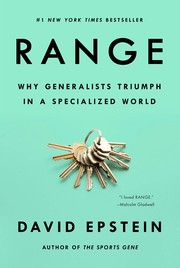
Range
David Epstein

The ONE Thing: The Surprisingly Simple Truth Behind Extraordinary Results
Gary Keller and Jay Papasan
The Sports Gene: Inside the Science of Extraordinary Athletic Performance
David Epstein
The Talent Code: Greatness Isn't Born. It's Grown. Here's How.
Daniel Coyle
Yes!: 50 Scientifically Proven Ways to Be Persuasive
Noah J. Goldstein, Steve J. Martin, Robert Cialdini
Showing 10 of 10 books