Author
Daniel C. Dennett
2 books in the library · referenced in 4 books
Explore Daniel C. Dennett's worksBooks by Daniel C. Dennett
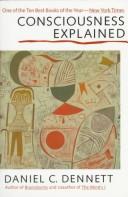
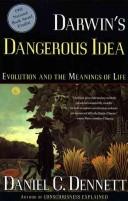
Showing 2 of 2 books
Books Daniel C. Dennett mentions & references
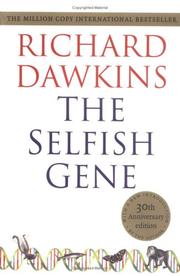 The Selfish GeneRichard DawkinsMentioned in 2 of their booksIn Consciousness Explained: Dennett utilizes the concept of memes to explain human consciousness as a cultural innovation running on biological hardware.In Darwin's Dangerous Idea: Supplies the gene-centered perspective and the concept of memes that Dennett utilizes for cultural evolution.Explore
- Explore
 Beyond Freedom and DignityB. F. SkinnerIn Darwin's Dangerous Idea: Discussed to contrast simplistic operant conditioning with algorithmic, gene-and-meme based evolutionary behavioral explanations.
- Explore
 Did Darwin Get It Right? Essays on Games, Sex and EvolutionJohn Maynard SmithIn Darwin's Dangerous Idea: Heavily cited in defense of rigorous adaptationism and game-theoretic models in evolutionary biology.
- Explore
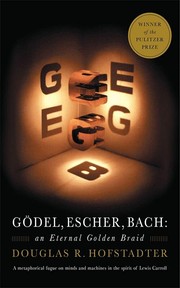 Gödel, Escher, Bach: An Eternal Golden BraidDouglas HofstadterIn Consciousness Explained: Dennett incorporates Hofstadter's concepts of self-referential strange loops to describe how a sense of self emerges.
- Explore
 Gödel, Escher, Bach: An Eternal Golden BraidDouglas R. HofstadterIn Darwin's Dangerous Idea: Informs Dennett's views on algorithms, recursive levels of explanation, and emergent intentionality.
- Explore
 Language and Problems of KnowledgeNoam ChomskyIn Darwin's Dangerous Idea: Critiqued for treating the emergence of language as an inexplicable saltation rather than an adaptation.
- Explore
 Meditations on First PhilosophyRené DescartesIn Consciousness Explained: Dennett critiques Cartesian dualism and the enduring myth of the 'Cartesian Theater' where consciousness supposedly comes together.
- Explore
 Minds, Brains and ScienceJohn SearleIn Consciousness Explained: Dennett directly challenges Searle's biological naturalism and the validity of the Chinese Room thought experiment.
 Mortal QuestionsThomas NagelIn Consciousness Explained: Dennett disputes Nagel's essay on bat consciousness and rejects the premise of ineffable, subjective qualia.Explore
- Explore
 Neurophilosophy: Toward a Unified Science of the Mind-BrainPatricia S. ChurchlandIn Consciousness Explained: Dennett aligns his methodology with Churchland's integration of empirical neuroscience and philosophy of mind.
- Explore
 On the Origin of SpeciesCharles DarwinIn Darwin's Dangerous Idea: Dennett analyzes Darwin's theory of natural selection as an algorithmic process that dissolves traditional cosmic teleology.
- Explore
Sociobiology: The New SynthesisEdward O. WilsonIn Darwin's Dangerous Idea: Discussed in depth during Dennett's defense of applying evolutionary principles to human culture and ethics.
- Explore
 The Blind WatchmakerRichard DawkinsIn Darwin's Dangerous Idea: Provides foundational arguments for design without a designer and cumulative selection operating without foresight.
- Explore
 The Concept of MindGilbert RyleIn Consciousness Explained: Dennett builds upon Ryle's foundational critique of the 'ghost in the machine' to dismantle internalist views of mind.
- Explore
 The Man Who Mistook His Wife for a HatOliver SacksIn Consciousness Explained: Dennett uses neurological clinical cases to illustrate how specific cognitive breakdowns undermine intuitive models of consciousness.
- Explore
 The Modularity of MindJerry A. FodorIn Darwin's Dangerous Idea: Engaged as a philosophical foil regarding mental architecture and resistance to evolutionary explanations of cognition.
- Explore
 The Origin of Consciousness in the Breakdown of the Bicameral MindJulian JaynesIn Consciousness Explained: Dennett engages with Jaynes' provocative thesis to discuss how language culturally installed the software of conscious self-monitoring.
- Explore
 The Origins of Order: Self-Organization and Selection in EvolutionStuart A. KauffmanIn Darwin's Dangerous Idea: Examined critically for claiming self-organization acts as a rival or supplement to natural selection.
- Explore
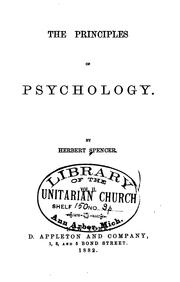 The Principles of PsychologyWilliam JamesIn Consciousness Explained: Dennett references James' classical description of the stream of consciousness while arguing against a single, unified stream.
- Explore
 The Problem of ConsciousnessColin McGinnIn Consciousness Explained: Dennett argues against McGinn's 'mysterian' view that consciousness is fundamentally beyond human cognitive comprehension.
- Explore
 The Society of MindMarvin MinskyIn Consciousness Explained: Dennett draws on Minsky's framework of decentralized mental agents to support his Multiple Drafts model.
- Explore
 The View from NowhereThomas NagelIn Darwin's Dangerous Idea: Challenged for skeptical arguments against naturalism and subjective experience being accountable by physical evolution.
- Explore
 Wonderful Life: The Burgess Shale and the Nature of HistoryStephen Jay GouldIn Darwin's Dangerous Idea: Serves as Dennett's primary target for critique regarding historical contingency, punctuated equilibrium, and anti-adaptationism.
Books that mention & reference Daniel C. Dennett
Consilience: The Unity of Knowledge
Edward O. Wilson
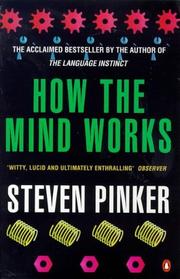
How the Mind Works
Steven Pinker

The Blank Slate
Steven Pinker
The Conscious Mind
David Chalmers
Showing 4 of 4 books