Author
James Gleick
2 books in the library · referenced in 1 book
Explore James Gleick's worksBooks by James Gleick
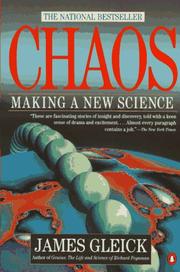
Showing 2 of 2 books
Books James Gleick mentions & references
 Cybernetics: Or Control and Communication in the Animal and the MachineNorbert WienerMentioned in 2 of their booksIn Chaos: Making a New Science: Foundational work on feedback mechanisms that laid groundwork for modern dynamical systems theory.In The Information: Explores feedback loops and the intersection of communication, control systems, and human thought.Explore
- Explore
 A Budget of ParadoxesAugustus De MorganIn The Information: Referenced during discussions of early mathematical logic and communication eccentricities.
- Explore
Dynamics: The Geometry of BehaviorRalph H. Abraham and Christopher D. ShawIn Chaos: Making a New Science: Visual guide that helped popularize geometric intuition in nonlinear dynamical systems.
 FiccionesJorge Luis BorgesIn The Information: Referenced for 'The Library of Babel', illustrating an infinite, combinatorial universe of information.Explore
- Explore
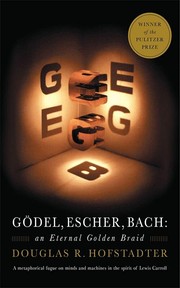 Gödel, Escher, Bach: An Eternal Golden BraidDouglas R. HofstadterIn Chaos: Making a New Science: Influential work exploring recursion and strange loops, closely linked to early chaos concepts.
- ExploreGödel, Escher, Bach: An Eternal Golden BraidDouglas HofstadterIn The Information: Explores self-reference, logic, computation, and information networks across disciplines.
- Explore
On Growth and FormD'Arcy Wentworth ThompsonIn Chaos: Making a New Science: Classic study of biological morphogenesis that foreshadowed geometric approaches to natural forms.
- Explore
 Orality and LiteracyWalter J. OngIn The Information: Examines how the invention of writing radically reorganized human consciousness and knowledge storage.
- Explore
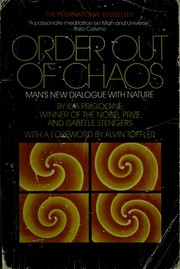 Order Out of ChaosIlya Prigogine and Isabelle StengersIn Chaos: Making a New Science: Influential work analyzing self-organization, non-equilibrium thermodynamics, and emergent macroscopic order.
- Explore
 Passages from the Life of a PhilosopherCharles BabbageIn The Information: Details the conception and mechanics of the Difference and Analytical Engines.
Preface to PlatoEric A. HavelockIn The Information: Analyzes the transition from oral poetic tradition to literate, abstract thought in ancient Greece.Explore
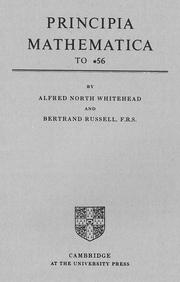 Principia MathematicaAlfred North Whitehead and Bertrand RussellIn The Information: Referenced in the history of symbolic logic, axiomatic systems, and Gödelian undecidability.Explore
- Explore
 Stability and Complexity in Model EcosystemsRobert M. MayIn Chaos: Making a New Science: Classic text demonstrating how simple nonlinear biological models generate unexpectedly chaotic population dynamics.
- Explore
 Structural Stability and MorphogenesisRené ThomIn Chaos: Making a New Science: Pioneering mathematical text introducing catastrophe theory and dynamical systems topology.
- Explore
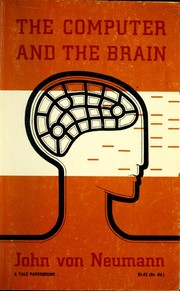 The Computer and the BrainJohn von NeumannIn The Information: Cited regarding digital versus analog processing and information architecture in brains and machines.
- Explore
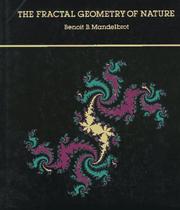 The Fractal Geometry of NatureBenoit B. MandelbrotIn Chaos: Making a New Science: Seminal treatise establishing fractal geometry, extensively detailed in Gleick's chapter on Mandelbrot.
- Explore
 The Geometry of Biological TimeArthur T. WinfreeIn Chaos: Making a New Science: Key biological study exploring non-linear rhythms and mathematical topologies in living organisms.
- Explore
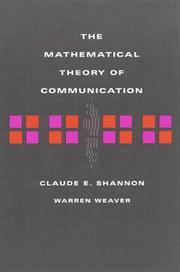 The Mathematical Theory of CommunicationClaude E. Shannon and Warren WeaverIn The Information: Provides the foundational mathematical framework for quantifying information and entropy explored throughout the book.
 The Selfish GeneRichard DawkinsIn The Information: Cited for introducing the concept of the meme as an evolving unit of cultural information.Explore
 The Structure of Scientific RevolutionsThomas S. KuhnIn Chaos: Making a New Science: Foundational text on paradigm shifts, framing Gleick's narrative of the chaos revolution.Explore
- Explore
 What Is Life?Erwin SchrödingerIn The Information: Introduced the concept of negative entropy and genetic information preceding the discovery of DNA.
Books that mention & reference James Gleick
Showing 1 of 1 books