Author

Yuval Noah Harari
Yuval Noah Harari is an Israeli medievalist, military historian, public intellectual, and popular science writer. He is a professor of history at the Hebrew University of Jerusalem. Wikipedia
3 books in the library · referenced in 4 books
Explore Yuval Noah Harari's worksBooks by Yuval Noah Harari

21 Lessons for the 21st Century
Yuval Noah Harari
Homo Deus: A Brief History of Tomorrow
Yuval Noah Harari

Nexus
Yuval Noah Harari
Showing 3 of 3 books
Books Yuval Noah Harari mentions & references
- Explore
 Superintelligence: Paths, Dangers, StrategiesNick BostromMentioned in 3 of their booksIn Nexus: Referenced when analyzing the threshold where artificial agents surpass human oversight in information management.In Homo Deus: A Brief History of Tomorrow: Cited regarding the existential risks and philosophical challenges posed by advanced artificial intelligence.In 21 Lessons for the 21st Century: Referenced regarding the long-term existential risks and challenges posed by autonomous artificial intelligence.
 Brave New WorldAldous HuxleyMentioned in 2 of their booksIn Nexus: Contrasted with Orwellian models to illustrate control achieved through biological manipulation and information overload.In 21 Lessons for the 21st Century: Analyzed as a prophetic depiction of a dystopia built on biological manipulation and consumer gratification rather than sheer fear.Explore
 Thinking, Fast and SlowDaniel KahnemanMentioned in 2 of their booksIn 21 Lessons for the 21st Century: Cited to illustrate human cognitive biases and how algorithms can exploit emotional thinking.In Homo Deus: A Brief History of Tomorrow: Provides behavioral economics concepts like the experiencing self versus the remembering self referenced in the text.Explore
- Explore
 1984George OrwellIn 21 Lessons for the 21st Century: Contrasted with Huxley to examine traditional totalitarian surveillance compared to modern data-driven control.
- Explore
Don QuixoteMiguel de CervantesIn Nexus: Invoked to illustrate early modern cultural anxieties regarding the psychological destabilization caused by printed fiction.
- Explore
 Fahrenheit 451Ray BradburyIn 21 Lessons for the 21st Century: Discussed in the context of science fiction exploring how societies succumb to ignorance and narrative simplification.
- Explore
Human Compatible: Artificial Intelligence and the Problem of ControlStuart RussellIn Nexus: Cited regarding the existential risks of autonomous algorithmic agency and the AI alignment problem.
- Explore
 Life 3.0: Being Human in the Age of Artificial IntelligenceMax TegmarkIn 21 Lessons for the 21st Century: Referenced for its framing of how biological intelligence might be superseded by machine intelligence.
- Explore
 Malleus MaleficarumHeinrich KramerIn Nexus: Analyzed as a catastrophic historical example of the early printing press amplifying dangerous misinformation and hysteria.
- Explore
 Mein KampfAdolf HitlerIn Nexus: Examined to dissect how totalitarian propaganda constructs closed information loops that justify violence.
- Explore
 Nineteen Eighty-FourGeorge OrwellIn Nexus: Used to explore the mechanics of totalitarian surveillance and state manipulation of information networks.
- Explore
 Sapiens: A Brief History of HumankindYuval Noah HarariIn Homo Deus: A Brief History of Tomorrow: Serves as the direct foundational precursor examining how humanity gained narrative dominance over the planet.
- Explore
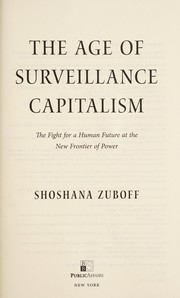 The Age of Surveillance CapitalismShoshana ZuboffIn Nexus: Referenced in discussions on how modern digital platforms commodify attention and undermine democratic discourse.
- Explore
The Gulag ArchipelagoAleksandr SolzhenitsynIn Nexus: Drawn upon to illustrate the brutal realities of Soviet bureaucratic information control and forced orthodoxy.
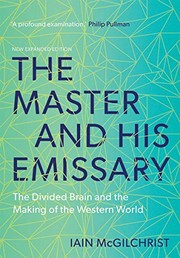 The Master and His EmissaryIain McGilchristIn Homo Deus: A Brief History of Tomorrow: Explores brain hemisphere divide, reinforcing Harari's discussions on human consciousness and intelligence.Explore
- Explore
 The Origins of TotalitarianismHannah ArendtIn Nexus: Cited to explain how ideological networks prioritize rigid order over factual truth to maintain power.
- Explore
The Second Machine AgeErik Brynjolfsson and Andrew McAfeeIn 21 Lessons for the 21st Century: Referenced in discussions on how automation, robotics, and computing will disrupt labor markets and employment.
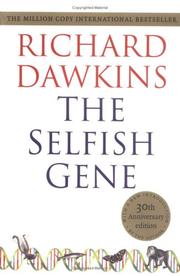 The Selfish GeneRichard DawkinsIn Homo Deus: A Brief History of Tomorrow: Informs the book's algorithmic and evolutionary view of life and biological processes.Explore
- Explore
 The Singularity Is NearRay KurzweilIn Homo Deus: A Brief History of Tomorrow: Presents techno-humanist predictions about superintelligence that Harari directly analyzes and critiques.
 The Structure of Scientific RevolutionsThomas S. KuhnIn Nexus: Mentioned to contrast self-correcting scientific networks with self-reinforcing dogmatic institutions.Explore
- Explore
 Weapons of Math DestructionCathy O'NeilIn 21 Lessons for the 21st Century: Referenced regarding the hidden biases in algorithmic decision-making and automated scoring systems.
Books that mention & reference Yuval Noah Harari

The Almanack of Naval Ravikant
Eric Jorgenson
The Dawn of Everything: A New History of Humanity
David Graeber and David Wengrow

The Price of Tomorrow
Jeff Booth

The Psychology of Money
Morgan Housel
Showing 4 of 4 books