Author
Richard H. Thaler
3 books in the library · referenced in 13 books
Explore Richard H. Thaler's worksBooks by Richard H. Thaler
Showing 3 of 3 books
Books Richard H. Thaler mentions & references
- Explore
 Judgment Under Uncertainty: Heuristics and BiasesDaniel Kahneman, Paul Slovic, and Amos TverskyMentioned in 3 of their booksIn Misbehaving: The seminal collection of papers that inspired Thaler to integrate cognitive psychology into economics.In Quasi Rational Economics: Provides the foundational cognitive psychology research on heuristics underpinning Thaler's behavioral economic models.In Nudge: Provides the foundational cognitive heuristics—anchoring, availability, and representativeness—that underpin the entire nudging framework.
- Explore
 Choices, Values, and FramesDaniel Kahneman and Amos TverskyMentioned in 2 of their booksIn Misbehaving: Foundational collection of prospect theory and framing papers central to Thaler's work.In Nudge: Supplies foundational research on prospect theory and framing effects used to demonstrate human departure from rational choice.
- Explore
 Micromotives and MacrobehaviorThomas C. SchellingMentioned in 2 of their booksIn Nudge: Influenced the authors' understanding of self-command mechanisms and how individual decisions aggregate into societal outcomes.In Quasi Rational Economics: Explores how individual choices aggregate into macro behaviors, frequently cited in discussions of self-command.
- Explore
 The Theory of Moral SentimentsAdam SmithMentioned in 2 of their booksIn Nudge: Cited to show that classical economics originally acknowledged human passions, myopia, and social empathy.In Misbehaving: Cited to show classical economics originally recognized human passions and bounded willpower.
- Explore
 The Winner's Curse: Paradoxes and Anomalies of Economic LifeRichard H. ThalerMentioned in 2 of their booksIn Nudge: Thaler's earlier work establishing empirical economic market anomalies that contradict standard rational-actor models.In Misbehaving: Thaler's earlier collection of regular Journal of Economic Perspectives columns documenting behavioral anomalies.
- Explore
An Economic Theorist's Book of TalesGeorge A. AkerlofIn Quasi Rational Economics: Applies psychological and sociological realism to economic theory, paralleling Thaler's behavioral approach.
- Explore
 Behavioral Game Theory: Experiments in Strategic InteractionColin F. CamererIn Misbehaving: Synthesizes empirical departures from standard game theory discussed extensively in the narrative.
- Explore
 Essays in Positive EconomicsMilton FriedmanIn Misbehaving: Critiques Friedman's influential 'as if' methodology justifying unrealistic rational choice assumptions in economics.
- Explore
Essays in the Theory of Risk-BearingKenneth J. ArrowIn Quasi Rational Economics: Discusses formal foundations of risk preferences examined against empirical anomalies in market behavior.
- Explore
 Foundations of Economic AnalysisPaul A. SamuelsonIn Misbehaving: Represents the mathematical neoclassical orthodoxy against which behavioral economics pushed back.
- Explore
 Influence: Science and PracticeRobert B. CialdiniIn Nudge: Cited to illustrate how social proof and conformity heavily sway individual decision-making in public and private contexts.
- Explore
Models of Man, Social and RationalHerbert A. SimonIn Quasi Rational Economics: Introduces bounded rationality, which serves as the intellectual cornerstone for quasi-rational economic behavior.
- Explore
 Nudge: Improving Decisions About Health, Wealth, and HappinessRichard H. Thaler and Cass R. SunsteinIn Misbehaving: Thaler's prior co-authored work applying behavioral economics principles to policy and choice architecture.
- Explore
 Obedience to AuthorityStanley MilgramIn Nudge: Cited to emphasize the profound power of authority and institutional framing over individual human behavior.
 Quasi Rational EconomicsRichard H. ThalerIn Misbehaving: Thaler's academic compendium of earlier research papers establishing the foundations of the field.Explore
 Stumbling on HappinessDaniel GilbertIn Nudge: Cited regarding human inability to accurately forecast future emotional states and satisfaction across major life choices.Explore
- Explore
 The Design of Everyday ThingsDonald A. NormanIn Nudge: Norman's concepts of intuitive product design directly informed Thaler and Sunstein's principles of effective choice architecture.
- Explore
The Economic Approach to Human BehaviorGary S. BeckerIn Quasi Rational Economics: Represents the standard rational choice benchmark that Thaler's quasi-rational anomalies directly challenge.
- Explore
 The General Theory of Employment, Interest, and MoneyJohn Maynard KeynesIn Misbehaving: Cited for early insights on animal spirits, convention, and stock market beauty contests.
- Explore
The Joyless EconomyTibor ScitovskyIn Quasi Rational Economics: Critiques traditional consumer theory by integrating psychological insights on human satisfaction and motivation.
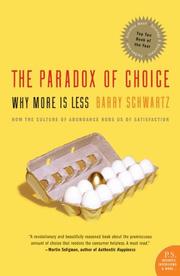 The Paradox of ChoiceBarry SchwartzIn Nudge: Referenced to explain why excessive options paralyze decision-makers, motivating the need for well-structured default choices.Explore
- Explore
The Strategy of ConflictThomas C. SchellingIn Quasi Rational Economics: Informs Thaler's work on commitment devices, bargaining, and self-control problems.
- Explore
 The Theory of InterestIrving FisherIn Misbehaving: Discussed as an early economic work recognizing behavioral aspects of intertemporal choice and impatience.
- Explore
 The Wealth of NationsAdam SmithIn Nudge: Referenced as the classical foundation of market incentives, against which behavioral departures are contrasted.
- Explore
Theory of Games and Economic BehaviorJohn von Neumann and Oskar MorgensternIn Quasi Rational Economics: Establishes expected utility theory, from which quasi-rational economic agents systematically deviate.
- Thinking, Fast and SlowDaniel KahnemanIn Misbehaving: Explores the dual-system cognitive psychology that underpins the behavioral anomalies Thaler details.Explore
Books that mention & reference Richard H. Thaler
Algorithms to Live By
Brian Christian
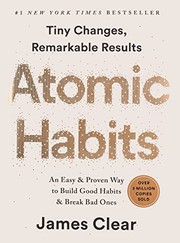
Atomic Habits
James Clear
Contagious: Why Things Catch On
Jonah Berger
Decisive: How to Make Better Choices in Life and Work
Chip Heath and Dan Heath
Give and Take
Adam Grant
Judgment in Managerial Decision Making
Max H. Bazerman
Noise: A Flaw in Human Judgment
Daniel Kahneman, Olivier Sibony, Cass R. Sunstein
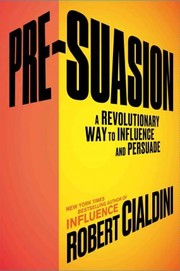
Pre-Suasion
Robert Cialdini
The Power of Habit
Charles Duhigg
The Willpower Instinct
Kelly McGonigal

Thinking in Bets
Annie Duke
Thinking, Fast and Slow
Daniel Kahneman

Willpower
Roy F. Baumeister
Showing 13 of 13 books