Author

Robert Sapolsky
Robert Morris Sapolsky is an American academic, neuroscientist, and primatologist. Wikipedia
3 books in the library · referenced in 0 books
Explore Robert Sapolsky's worksBooks by Robert Sapolsky
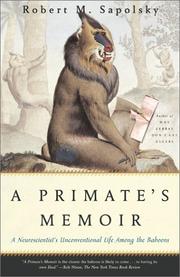
A Primate's Memoir
Robert Sapolsky
Behave
Robert Sapolsky

Determined: A Science of Life Without Free Will
Robert Sapolsky
Showing 3 of 3 books
Books Robert Sapolsky mentions & references
- Explore
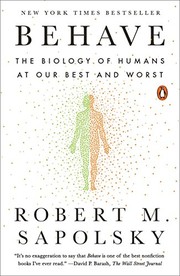 Behave: The Biology of Humans at Our Best and WorstRobert SapolskyIn Determined: A Science of Life Without Free Will: Serves as the foundational biological prequel that provides the underlying neurobiological and endocrinological mechanisms for his arguments against free will.
- Explore
 Catch-22Joseph HellerIn A Primate's Memoir: Cited to capture the absurd, circular bureaucracy of post-colonial government and travel offices in East Africa.
- Explore
 Chimpanzee PoliticsFrans de WaalIn Behave: Cited frequently to compare primate social hierarchies, reconciliation behaviors, and coalitionary violence to humans.
- Explore
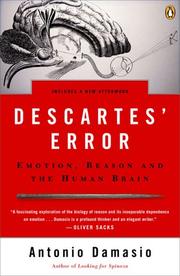 Descartes' ErrorAntonio DamasioIn Behave: Referenced for the critical role emotion and the ventromedial prefrontal cortex play in social decision-making.
- Explore
Free Agents: How Evolution Made Us FreeKevin J. MitchellIn Determined: A Science of Life Without Free Will: Discussed and challenged as a contemporary neuroscientific defense of emergent agency and libertarian-style free will.
- Explore
 Free WillSam HarrisIn Determined: A Science of Life Without Free Will: Referenced as a complementary popular work arguing against the existence of free will based on neuroscience.
- Explore
 Freedom EvolvesDaniel DennettIn Determined: A Science of Life Without Free Will: Critiqued as a prime example of compatibilist philosophy that redefines free will without addressing causal determinism.
- Explore
 Heart of DarknessJoseph ConradIn A Primate's Memoir: Referenced when describing the psychological toll and isolation experienced by foreigners in the African bush.
- Explore
 In the Shadow of ManJane GoodallIn A Primate's Memoir: Referenced in the context of early East African primatology and habituating wild primates to human observers.
- Explore
Just Deserts: Debating Free WillDaniel Dennett and Gregg CarusoIn Determined: A Science of Life Without Free Will: Referenced regarding the philosophical debate between compatibilist retributivism and determinist skepticism in law.
- Explore
 Living Without Free WillDerk PereboomIn Determined: A Science of Life Without Free Will: Cited extensively for its philosophical framework of hard incompatibilism and its model for quarantine-based criminal justice.
- Explore
Moral TribesJoshua GreeneIn Behave: Cited regarding fMRI neuroimaging studies during moral dilemmas, contrasting automatic emotional responses with deliberative calculation.
- Explore
 Nonzero: The Logic of Human DestinyRobert WrightIn Behave: Cited in the context of evolutionary game theory and non-zero-sum cooperative outcomes.
- Explore
 Obedience to AuthorityStanley MilgramIn Behave: Examined to evaluate psychological and neurobiological mechanisms underlying compliance with malevolent authority.
- Explore
 Out of AfricaIsak DinesenIn A Primate's Memoir: Sapolsky evokes the romanticized colonial Kenyan landscape and contrasts it with his unglamorous, gritty field experiences.
- Explore
 Sociobiology: The New SynthesisEdward O. WilsonIn Behave: Foundational text referenced regarding the evolutionary basis of animal and human social behavior.
- Explore
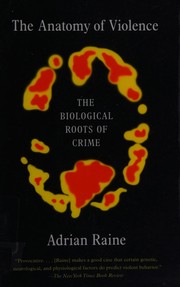 The Anatomy of Violence: The Biological Roots of CrimeAdrian RaineIn Determined: A Science of Life Without Free Will: Cited regarding neurobiological risk factors for violent behavior and the implications for legal culpability.
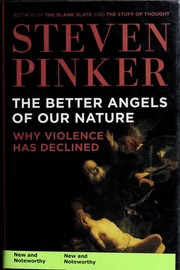 The Better Angels of Our NatureSteven PinkerIn Behave: Sapolsky examines Pinker's claims regarding historical declines in violence through a biological and cultural lens.Explore
 The Blank SlateSteven PinkerIn Behave: Critiqued and referenced regarding gene-environment interactions and debates surrounding modern evolutionary psychology.Explore
- Explore
 The Double HelixJames D. WatsonIn A Primate's Memoir: Mentioned in reflections on academic ambition, competition, and youthful scientific discovery.
- Explore
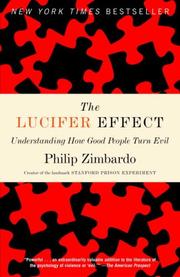 The Lucifer EffectPhilip ZimbardoIn Behave: Discussed in analyzing situational pressures, institutional obedience, and how normal people commit cruel acts.
- Explore
 The PlagueAlbert CamusIn A Primate's Memoir: Evoked as Sapolsky deals with the emotional devastation of a fatal tuberculosis epidemic among his study troop.
 The Righteous MindJonathan HaidtIn Behave: Cited extensively to explore moral intuitionism, disgust, and the evolutionary roots of political divergence.Explore
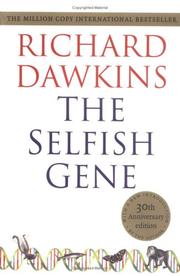 The Selfish GeneRichard DawkinsIn Behave: Serves as a fundamental reference for kin selection, inclusive fitness, and game theory in evolutionary biology.Explore
- Explore
 The Significance of Free WillRobert KaneIn Determined: A Science of Life Without Free Will: Referenced in the discussion of libertarian free will that relies on quantum indeterminacy in the brain.
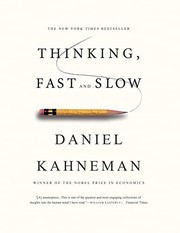 Thinking, Fast and SlowDaniel KahnemanIn Behave: Referenced for dual-process theory, unconscious heuristics, and cognitive biases shaping human decision-making.Explore
- Explore
Who's in Charge? Free Will and the Science of the BrainMichael S. GazzanigaIn Determined: A Science of Life Without Free Will: Analyzed and disputed regarding the claim that personal responsibility emerges from social interaction rather than mechanistic brains.
- Explore
 Why Free Will Is RealChristian ListIn Determined: A Science of Life Without Free Will: Addressed as a sophisticated philosophical defense arguing for free will as an emergent phenomenon at higher organizational levels.