Author
Thomas Sowell
3 books in the library · referenced in 0 books
Explore Thomas Sowell's worksBooks by Thomas Sowell

A Conflict of Visions
Thomas Sowell

Basic Economics
Thomas Sowell
Intellectuals and Society
Thomas Sowell
Showing 3 of 3 books
Books Thomas Sowell mentions & references
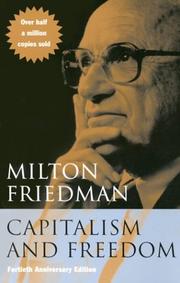 Capitalism and FreedomMilton FriedmanMentioned in 2 of their booksIn Basic Economics: Referenced regarding the efficiency of competitive markets versus government intervention in areas like licensing and education.In Intellectuals and Society: Cited to demonstrate the role of market mechanisms over political and intellectual direction.Explore
- Explore
 Reflections on the Revolution in FranceEdmund BurkeMentioned in 2 of their booksIn Intellectuals and Society: Cited to contrast traditional wisdom and incremental change with the unconstrained vision of intellectuals.In A Conflict of Visions: Analyzed as a premier articulation of the constrained vision valuing evolved traditions over articulated rational design.
- Explore
 The Wealth of NationsAdam SmithMentioned in 2 of their booksIn A Conflict of Visions: Cited to explain systemic incentives and unintended social consequences central to the constrained vision.In Basic Economics: Cited frequently to illustrate foundational market mechanisms, the division of labor, and the unintended social benefits of self-interested exchange.
 A Theory of JusticeJohn RawlsIn A Conflict of Visions: Critiqued as a prominent modern manifestation of the unconstrained pursuit of cosmic justice.Explore
- Explore
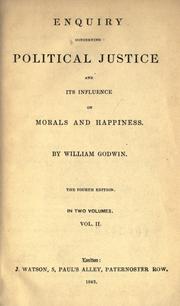 An Enquiry Concerning Political JusticeWilliam GodwinIn A Conflict of Visions: Served as Sowell's primary benchmark text representing the unconstrained vision of human perfectibility and reason.
- Explore
 An Essay on the Principle of PopulationThomas Robert MalthusIn Basic Economics: Cited in chapters on resource constraints and historical misconceptions regarding population growth and food supply.
- Explore
 Anarchy, State, and UtopiaRobert NozickIn A Conflict of Visions: Referenced as a modern articulation of process-oriented, constrained concepts of justice and rights.
- Explore
 Economic Policy: Thoughts for Today and TomorrowLudwig von MisesIn Intellectuals and Society: Referenced regarding the practical failures of economic policies driven by academic theories.
 Economics in One LessonHenry HazlittIn Basic Economics: Serves as a philosophical foundation for evaluating economic policies by their long-term, secondary consequences rather than immediate intentions.Explore
- Explore
Free to ChooseMilton Friedman and Rose FriedmanIn Basic Economics: Referenced when demonstrating the real-world drawbacks of price controls, trade barriers, and welfare systems.
- Explore
 Knowledge and DecisionsThomas SowellIn Intellectuals and Society: Establishes Sowell's core economic arguments about dispersed knowledge versus centralized decision-making.
- Explore
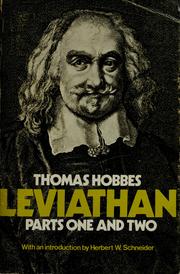 LeviathanThomas HobbesIn A Conflict of Visions: Analyzed in the context of order, power, and the necessity of social constraints on human self-interest.
- Explore
 Losing GroundCharles MurrayIn Basic Economics: Cited to illustrate how well-intended welfare programs can create counterproductive incentives for recipients.
 On LibertyJohn Stuart MillIn A Conflict of Visions: Discussed as an influential hybrid thinker who bridged elements of both visions regarding social decision-making.Explore
- Explore
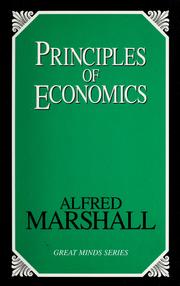 Principles of EconomicsAlfred MarshallIn Basic Economics: Cited on fundamental principles of marginal utility, supply, and demand schedules.
 Risk, Uncertainty and ProfitFrank H. KnightIn Basic Economics: Referenced to explain the vital role of profit and loss as compensation for bearing uninsurable economic uncertainty.Explore
- Explore
Sketch for a Historical Picture of the Progress of the Human MindMarquis de CondorcetIn A Conflict of Visions: Examined alongside Godwin as an archetype of the unconstrained vision of unlimited human progress.
- Explore
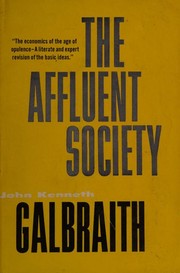 The Affluent SocietyJohn Kenneth GalbraithIn Basic Economics: Examined critically regarding claims about manufactured consumer demand and the balance between public and private expenditure.
- Explore
 The Constitution of LibertyFriedrich HayekIn Intellectuals and Society: Cited regarding the role of rule of law and the systemic knowledge embodied in traditions.
- ExploreThe Constitution of LibertyFriedrich A. HayekIn A Conflict of Visions: Informs Sowell's treatment of dispersed, systemic knowledge versus articulated rationality.
 The Fatal Conceit: The Errors of SocialismFriedrich HayekIn Intellectuals and Society: Referenced regarding the limits of central planning and the overestimation of intellectual knowledge.Explore
- Explore
The Federalist PapersAlexander Hamilton, James Madison, and John JayIn A Conflict of Visions: Used to illustrate the constrained vision applied to constitutional design, checks and balances, and institutional trade-offs.
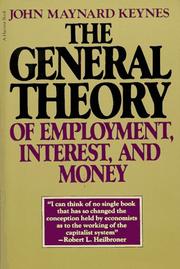 The General Theory of Employment, Interest and MoneyJohn Maynard KeynesIn Basic Economics: Referenced critically in discussions contrasting Keynesian demand management with classical supply-side perspectives.Explore
- Explore
The Higher Circles: The American Ruling ClassG. William DomhoffIn Intellectuals and Society: Discussed as an example of social theories propagated by intellectual elites.
- Explore
 The Machiavellians: Defenders of FreedomJames BurnhamIn Intellectuals and Society: Cited in discussions of elite theory and the self-interest of managerial and intellectual classes.
- Explore
 The Open Society and Its EnemiesKarl PopperIn Intellectuals and Society: Referenced in discussions about utopian social engineering versus piecemeal social engineering.
- Explore
 The Opium of the IntellectualsRaymond AronIn Intellectuals and Society: Referenced in analyzing the tendency of intellectuals to embrace totalizing political ideologies.
- Explore
 The Rhetoric of ReactionAlbert O. HirschmanIn Intellectuals and Society: Referenced regarding arguments used by intellectuals against conservative and traditionalist positions.
- Explore
 The Road to SerfdomFriedrich HayekIn Basic Economics: Cited to argue against the feasibility of central economic planning and the inevitable erosion of freedom under state control.
- Explore
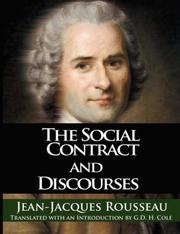 The Social ContractJean-Jacques RousseauIn A Conflict of Visions: Referenced to illustrate how the unconstrained vision diagnoses societal institutions as corrupting inherently benign human nature.
- Explore
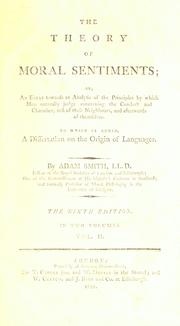 The Theory of Moral SentimentsAdam SmithIn A Conflict of Visions: Cited extensively to establish the classical foundation of the constrained vision regarding immutable human nature.
- Explore
The Vision of the Anointed: Self-Congratulation as a Basis for Social PolicyThomas SowellIn Intellectuals and Society: Provides the underlying theoretical framework regarding how intellectuals view themselves and society.