Author
Viktor E. Frankl
2 books in the library · referenced in 12 books
Explore Viktor E. Frankl's worksBooks by Viktor E. Frankl

Showing 2 of 2 books
Books Viktor E. Frankl mentions & references
 Being and TimeMartin HeideggerMentioned in 2 of their booksIn Man's Search for Meaning: Heidegger's existential ontology heavily influenced Frankl's concept of existential analysis and human responsibility.In The Will to Meaning: Heidegger's existential analysis of human being-in-the-world is referenced in defining the ontological framework of logotherapy.Explore
- Explore
 Becoming: Basic Considerations for a Psychology of PersonalityGordon W. AllportIn The Will to Meaning: Frankl refers to Allport's work on human motivation and the self-transcending nature of human personality.
- Explore
Being and NothingnessJean-Paul SartreIn The Will to Meaning: Frankl contrasts his perspective that meaning is discovered with Sartre's claim that meaning must be arbitrarily invented.
- Explore
 Beyond the Pleasure PrincipleSigmund FreudIn The Will to Meaning: Frankl contrasts his concept of the 'will to meaning' against the Freudian 'pleasure principle' (will to pleasure).
- Explore
 FaustJohann Wolfgang von GoetheIn Man's Search for Meaning: Frankl draws upon Goethe's literary works to reflect on human endurance, spirit, and cultural resilience.
- Explore
 Formalism in Ethics and Non-Formal Ethics of ValuesMax SchelerIn The Will to Meaning: Scheler's phenomenological value theory serves as a major philosophical pillar for Frankl's concept of objective values and dimensional ontology.
- Explore
 General PsychopathologyKarl JaspersIn The Will to Meaning: Frankl invokes Jaspers' concept of boundary situations and philosophical approach to psychiatric illness.
- Explore
 Modern Man in Search of a SoulCarl Gustav JungIn The Will to Meaning: Frankl discusses Jung's recognition that neuroses often stem from spiritual distress and a loss of ultimate meaning.
- Explore
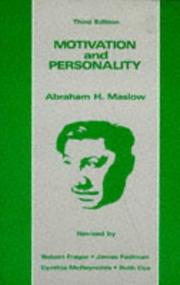 Motivation and PersonalityAbraham H. MaslowIn The Will to Meaning: Frankl critically examines Maslow's hierarchy of needs, arguing that self-actualization is a byproduct of self-transcendence rather than the ultimate goal.
- Explore
 The Death of Ivan IlyichLeo TolstoyIn Man's Search for Meaning: Frankl cites Tolstoy's novella to illustrate how facing death clarifies life's ultimate meaning and purpose.
 The Interpretation of DreamsSigmund FreudIn Man's Search for Meaning: Frankl contrasts his meaning-centered logotherapy with Freud's focus on the pleasure principle and psychoanalysis.Explore
- Explore
 The Neurotic ConstitutionAlfred AdlerIn Man's Search for Meaning: Frankl diverges from Adlerian individual psychology, replacing the 'will to power' with the 'will to meaning'.
- Explore
 The Practice and Theory of Individual PsychologyAlfred AdlerIn The Will to Meaning: Frankl contrasts logotherapy with Adlerian individual psychology, differentiating the will to meaning from the 'will to power'.
- Explore
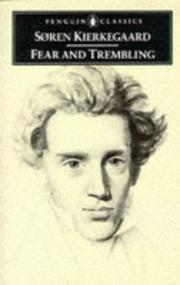 The Sickness Unto DeathSøren KierkegaardIn Man's Search for Meaning: Kierkegaard's existential philosophy on despair and faith deeply informs Frankl's views on suffering and meaning.
- Explore
The World as Will and RepresentationArthur SchopenhauerIn The Will to Meaning: Frankl cites Schopenhauer when addressing the universal problem of the existential vacuum, boredom, and suffering.
- Explore
 Thus Spoke ZarathustraFriedrich NietzscheIn Man's Search for Meaning: Frankl frequently quotes Nietzsche's principle that he who has a why to live can bear almost any how.
- Explore
 Twilight of the IdolsFriedrich NietzscheIn The Will to Meaning: Frankl references Nietzsche's famous maxim that he who has a 'why' to live can bear almost any 'how'.
Books that mention & reference Viktor E. Frankl
Dare to Lead
Brené Brown
Death in Life: Survivors of Hiroshima
Robert Jay Lifton
Ego is the Enemy
Ryan Holiday
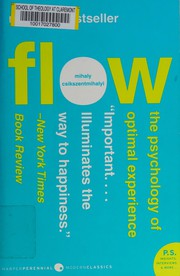
Flow: The Psychology of Optimal Experience
Mihaly Csikszentmihalyi
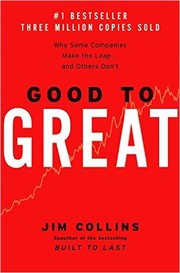
Good to Great
Jim Collins
How the Mighty Fall
Jim Collins
Nonviolent Communication: A Language of Life
Marshall B. Rosenberg
Option B
Sheryl Sandberg, Adam Grant
The 7 Habits of Highly Effective People
Stephen R. Covey
The daily stoic
Ryan Holiday

The Let Them Theory
Mel Robbins
The Obstacle Is the Way
Ryan Holiday
Showing 12 of 12 books