Author

Jim Collins
James C. Collins is an American researcher, author, speaker and consultant focused on business management and company sustainability and growth. Wikipedia
6 books in the library · referenced in 9 books
Explore Jim Collins's worksBooks by Jim Collins

Built to Last
Jim Collins
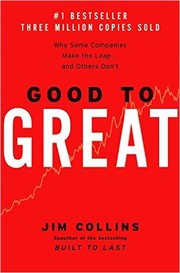
Good to Great
Jim Collins

Good to Great and the Social Sectors
Jim Collins
Great by Choice
Jim Collins, Morten T. Hansen
How the Mighty Fall
Jim Collins
The Flywheel Effect: How to Drive Sustainable Growth for Your Business
Jim Collins
Showing 6 of 6 books
Books Jim Collins mentions & references
- Explore
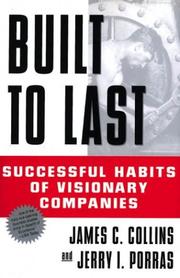 Built to Last: Successful Habits of Visionary CompaniesJim Collins and Jerry I. PorrasMentioned in 3 of their booksIn Good to Great: Collins's previous research study providing the baseline concepts and visionary framework that Good to Great builds upon.In Good to Great and the Social Sectors: Cited for its concepts of preserving the core ideology while stimulating progress, which applies directly to enduring social institutions.In The Flywheel Effect: How to Drive Sustainable Growth for Your Business: Provides foundational research on enduring corporate momentum and core ideology supporting flywheel architecture.
Competitive StrategyMichael E. PorterMentioned in 2 of their booksIn Great by Choice: Referenced when discussing industry environments and strategic positioning under competitive pressure.In Good to Great: Referenced when discussing market differentiation, focus, and core economic engines of transition companies.Explore
Good to GreatJim CollinsMentioned in 2 of their booksIn How the Mighty Fall: Serves as the empirical baseline for the study, tracking why several previously analyzed 'great' companies subsequently suffered catastrophic decline.In Great by Choice: Serves as the methodological and conceptual foundation for comparing sustained elite performers against industry peers.Explore
- Explore
In Search of ExcellenceThomas J. Peters and Robert H. Waterman Jr.Mentioned in 2 of their booksIn Built to Last: Examined and critiqued regarding earlier empirical attempts to identify enduring corporate excellence.In Good to Great: Cited as a prominent predecessor in business research on sustained organizational performance.
Man's Search for MeaningViktor E. FranklMentioned in 2 of their booksIn How the Mighty Fall: Cited on the psychological dynamics of maintaining purpose and avoiding capitulation to despair in Stage 5.In Good to Great: Referenced in discussion of enduring suffering and brutal reality while maintaining ultimate faith (the Stockdale Paradox).Explore
- Explore
My Years with General MotorsAlfred P. Sloan Jr.Mentioned in 2 of their booksIn Great by Choice: Cited as an example of disciplined empirical management and organizational systemization at scale.In Good to Great: Classic corporate study cited regarding executive governance and organizational discipline.
- Explore
 Only the Paranoid SurviveAndrew S. GroveMentioned in 2 of their booksIn Good to Great: Cited regarding strategic inflection points and facing brutal market realities directly.In The Flywheel Effect: How to Drive Sustainable Growth for Your Business: Referenced regarding strategic inflection points and Intel's disciplined adaptation of its business model.
- Explore
 A Business and Its Beliefs: The Ideas That Helped Build IBMThomas J. Watson Jr.In Built to Last: Cited heavily to illustrate how core ideology and philosophical beliefs sustain a visionary company over time.
- Explore
Built to LastJim Collins, Jerry I. PorrasIn Great by Choice: Referenced for its foundational framework on visionary companies and preserving the core while stimulating progress.
- Explore
- Explore
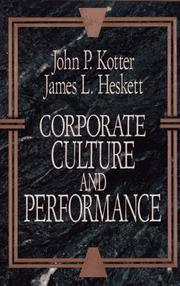 Corporate Culture and PerformanceJohn P. Kotter and James L. HeskettIn Built to Last: Referenced in discussions on the link between strong corporate culture and long-term economic performance.
- Explore
Denial: Why Business Leaders Fail to Look Facts in the Face—and What to Do About ItRichard S. TedlowIn How the Mighty Fall: Referenced during the examination of Stage 3 ('Denial of Risk and Peril'), where leaders discount negative data.
- Explore
Endurance: Shackleton's Incredible VoyageAlfred LansingIn How the Mighty Fall: Used to exemplify the resilience, stoicism, and disciplined leadership required to never capitulate in a crisis.
Fooled by RandomnessNassim Nicholas TalebIn Great by Choice: Referenced in the analysis of luck, randomness, and distinguishing true skill from serendipity in business performance.Explore
- Explore
Good to Great: Why Some Companies Make the Leap... and Others Don'tJim CollinsIn The Flywheel Effect: How to Drive Sustainable Growth for Your Business: Introduced the original flywheel concept that this monograph explores and operationalizes in depth.
- Explore
Great by Choice: Uncertainty, Chaos, and Luck—Why Some Thrive Despite Them AllJim Collins and Morten T. HansenIn The Flywheel Effect: How to Drive Sustainable Growth for Your Business: Examines disciplined execution and empirical creativity that fuel and sustain organizational flywheels.
How the Mighty FallJim CollinsIn Great by Choice: Referenced to illustrate how undisciplined expansion and hubris lead formerly great enterprises into catastrophic decline.Explore
- Explore
How the Mighty Fall: And Why Some Companies Never Give InJim CollinsIn The Flywheel Effect: How to Drive Sustainable Growth for Your Business: Explores the reverse of the flywheel when companies abandon disciplined momentum and overreach.
- Explore
In Search of ExcellenceTom Peters and Robert H. Waterman Jr.In How the Mighty Fall: Mentioned when analyzing the long-term impermanence of corporate excellence across management literature.
- Explore
Innovation and EntrepreneurshipPeter F. DruckerIn Great by Choice: Mentioned in the context of systematic innovation versus undisciplined, high-risk gambles.
- Explore
 Leadership Is an ArtMax De PreeIn Good to Great: Cited in the exploration of servant leadership and personal humility found in Level 5 leaders.
- Explore
Managing on the EdgeRichard PascaleIn Built to Last: Cited regarding organizational adaptation, creative tension, and corporate longevity.
- Explore
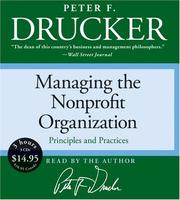 Managing the Non-Profit Organization: Principles and PracticesPeter F. DruckerIn Good to Great and the Social Sectors: Referenced as a foundational text addressing the unique governance, mission orientation, and leadership dynamics of mission-driven groups.
- Explore
 Team of Rivals: The Political Genius of Abraham LincolnDoris Kearns GoodwinIn Good to Great and the Social Sectors: Cited to illustrate how Level 5 leaders wield legislative rather than autocratic authority to build consensus among disparate factions.
The Black SwanNassim Nicholas TalebIn Great by Choice: Cited regarding extreme, unpredictable outlier events and how organizations must navigate unexpected external shocks.Explore
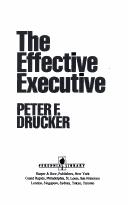 The Effective ExecutivePeter F. DruckerIn Good to Great: Referenced regarding executive decision-making, management discipline, and organizational effectiveness.Explore
- Explore
The Effective Executive: The Definitive Guide to Getting the Right Things DonePeter F. DruckerIn Good to Great and the Social Sectors: Referenced for the distinction between executive power and legislative leadership required in distributed-power environments.
- Explore
The Everything Store: Jeff Bezos and the Age of AmazonBrad StoneIn The Flywheel Effect: How to Drive Sustainable Growth for Your Business: Documents Amazon's direct application of Collins's flywheel concept to propel its long-term growth.
- Explore
 The Functions of the ExecutiveChester I. BarnardIn Built to Last: Referenced regarding executive responsibility in establishing and communicating corporate values and purpose.
- Explore
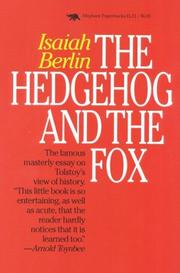 The Hedgehog and the FoxIsaiah BerlinIn Good to Great: Provides the philosophical essay from which Collins derives the core strategic framework, the Hedgehog Concept.
- Explore
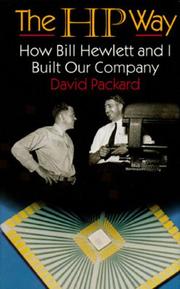 The HP Way: How Bill Hewlett and I Built Our CompanyDavid PackardIn Built to Last: Drawn upon as direct source material detailing Hewlett-Packard's founding culture and enduring core values.
- Explore
The Last Place on EarthRoland HuntfordIn Great by Choice: Provides the detailed historical account of the South Pole race between Roald Amundsen and Robert Falcon Scott used as the central metaphor.
- Explore
The March of FollyBarbara W. TuchmanIn How the Mighty Fall: Cited to illustrate how governments and institutions consistently pursue policies contrary to their own interests due to willful blindness.
- Explore
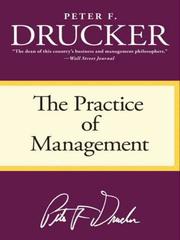 The Practice of ManagementPeter F. DruckerIn Built to Last: Cited for fundamental insights on management objectives, purpose, and institutional continuity.
- Explore
The Right StuffTom WolfeIn Great by Choice: Referenced to illustrate the calm, disciplined psychology of risk management and testing under extreme conditions.
- Explore
The Smartest Guys in the RoomBethany McLean and Peter ElkindIn How the Mighty Fall: Referenced as a case study in Stage 1 ('Hubris Born of Success') and Stage 4 ('Grasping for Salvation') regarding the collapse of Enron.
 The Structure of Scientific RevolutionsThomas S. KuhnIn Built to Last: Referenced to discuss shifting paradigms in management theory and empirical research methods.Explore
Books that mention & reference Jim Collins
Blue ocean strategy
W. Chan Kim
Clockwork: Design Your Business to Run Itself
Mike Michalowicz
Creativity, Inc.: Overcoming the Unseen Forces That Stand in the Way of True Inspiration
Ed Catmull
Give and Take
Adam Grant
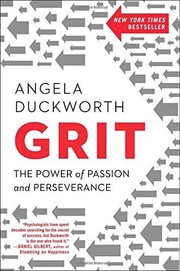
Grit: The Power of Passion and Perseverance
Angela Duckworth
Originals
Adam Grant
The Everything Store
Brad Stone
The Outsiders: Eight Unconventional CEOs and Their Radically Rational Blueprint for Success
William N. Thorndike
Traction: Get a Grip on Your Business
Gino Wickman
Showing 9 of 9 books