Author

Daniel Kahneman
Daniel Kahneman was an Israeli-American psychologist best known for his work on the psychology of judgment and decision-making as well as behavioral economics, for which he was awarded the 2002 Nobel Memorial Prize in Economic Sciences together with Vernon L. Smith. Wikipedia
3 books in the library · referenced in 39 books
Explore Daniel Kahneman's worksBooks by Daniel Kahneman
Attention and Effort
Daniel Kahneman
Noise: A Flaw in Human Judgment
Daniel Kahneman, Olivier Sibony, Cass R. Sunstein
Thinking, Fast and Slow
Daniel Kahneman
Showing 3 of 3 books
Books Daniel Kahneman mentions & references
- Explore
Nudge: Improving Decisions About Health, Wealth, and HappinessRichard H. Thaler and Cass R. SunsteinMentioned in 2 of their booksIn Noise: A Flaw in Human Judgment: Referenced in the context of institutional choice architecture and decision hygiene practices designed to mitigate error.In Thinking, Fast and Slow: Referenced to illustrate real-world policy applications and choice architecture rooted in cognitive biases.
- Explore
Rational Choice in an Uncertain WorldRobyn M. DawesMentioned in 2 of their booksIn Noise: A Flaw in Human Judgment: Cited regarding the robust power of equal-weighted and improper linear models in decision-making over subjective human evaluation.In Thinking, Fast and Slow: Cited to show that simple statistical algorithms consistently outperform clinical human judgment.
- Explore
Activation and BehaviorElizabeth DuffyIn Attention and Effort: Provides foundational concepts and empirical data on physiological arousal measures used to study mental effort.
- Explore
Clinical Versus Statistical Prediction: A Theoretical Analysis and a Review of the EvidencePaul E. MeehlIn Noise: A Flaw in Human Judgment: Cited for the pioneering demonstration that simple algorithms and mechanical rules consistently outperform expert clinical judgment.
- Explore
Cognitive PsychologyUlric NeisserIn Attention and Effort: Cited extensively regarding the distinction between preattentive processes and focal, effortful attention.
- Explore
Conflict, Arousal, and CuriosityD. E. BerlyneIn Attention and Effort: Referenced in discussions linking collative stimulus properties to arousal and attentional allocation.
- Explore
Criminal Sentences: Law Without OrderMarvin E. FrankelIn Noise: A Flaw in Human Judgment: Cited as the foundational exposé that revealed massive, arbitrary sentencing disparities among federal judges, illustrating system noise.
- Explore
Expert Political Judgment: How Good Is It? How Can We Know?Philip E. TetlockIn Noise: A Flaw in Human Judgment: Cited for empirical evidence that prominent experts' long-term geopolitical predictions are often subject to high variability and low accuracy.
- Explore
Human PerformancePaul M. Fitts and Michael I. PosnerIn Attention and Effort: Cited for analyses of information-processing limits, task difficulty, and stages of skill acquisition.
- Explore
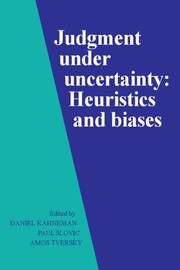 Judgment under Uncertainty: Heuristics and BiasesDaniel Kahneman, Paul Slovic, and Amos TverskyIn Thinking, Fast and Slow: Compiles foundational research papers establishing the heuristics and biases program discussed throughout the book.
- Explore
Judgments Under Uncertainty: Heuristics and BiasesDaniel Kahneman, Paul Slovic, and Amos TverskyIn Noise: A Flaw in Human Judgment: Cited as the baseline literature mapping the underlying cognitive shortcuts that generate both bias and inconsistent judgments.
- Explore
Models of Man, Social and RationalHerbert A. SimonIn Thinking, Fast and Slow: Provided the foundational framework of bounded rationality that inspired Kahneman and Tversky's behavioral research.
- Explore
On Human CommunicationColin CherryIn Attention and Effort: Referenced regarding pioneering dichotic listening experiments and the cocktail party phenomenon.
- Explore
Perception and CommunicationDonald E. BroadbentIn Attention and Effort: Serves as the primary theoretical baseline and counterpoint for Kahneman's capacity-based model of attention.
- Explore
Perception and the Conditioned ReflexE. N. SokolovIn Attention and Effort: Drawn upon for his model of the orienting reflex and how novel stimuli capture attention involuntarily.
- Explore
Plans and the Structure of BehaviorGeorge A. Miller, Eugene Galanter, and Karl H. PribramIn Attention and Effort: Referenced in analyzing executive control and hierarchical plans that govern the allocation of effort.
- Explore
Simple Heuristics That Make Us SmartGerd Gigerenzer, Peter M. Todd, and the ABC Research GroupIn Noise: A Flaw in Human Judgment: Discussed in contrasting perspectives regarding whether fast-and-frugal heuristics reduce error compared to formal algorithmic models.
- Explore
 Sources of Power: How People Make DecisionsGary KleinIn Thinking, Fast and Slow: Kahneman contrasts his heuristic framework with Klein's recognition-primed decision model to examine intuitive expertise.
- Explore
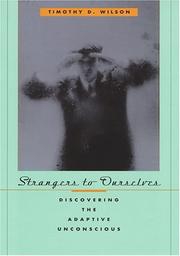 Strangers to Ourselves: Discovering the Adaptive UnconsciousTimothy D. WilsonIn Thinking, Fast and Slow: Cited to support evidence on how automatic priming influences behavior without conscious awareness.
- Explore
Superforecasting: The Art and Science of PredictionPhilip E. Tetlock and Dan GardnerIn Noise: A Flaw in Human Judgment: Cited regarding the traits of elite forecasters who actively minimize noise through iterative updates and cognitive discipline.
- Explore
 The Black Swan: The Impact of the Highly ImprobableNassim Nicholas TalebIn Thinking, Fast and Slow: Cited regarding the narrative fallacy and how retrospective storytelling fosters illusions of predictability.
- Explore
The Information Available in Brief Visual PresentationsGeorge SperlingIn Attention and Effort: Discussed regarding sensory memory persistence and the limits of rapid attentional read-out.
- Explore
The Organization of BehaviorDonald O. HebbIn Attention and Effort: Cited regarding the relationship between physiological arousal, cortical activation, and behavioral efficiency.
- Explore
The Principles of PsychologyWilliam JamesIn Attention and Effort: Referenced for foundational classical observations on voluntary versus involuntary attention and the phenomenology of effort.
- Explore
The Wisdom of CrowdsJames SurowieckiIn Noise: A Flaw in Human Judgment: Referenced when demonstrating how statistical aggregation across independent judgments cancels out individual noise.
Thinking, Fast and SlowDaniel KahnemanIn Noise: A Flaw in Human Judgment: Referenced throughout as the sister volume focusing on cognitive bias, whereas this book explores unwanted variability and noise.Explore
Books that mention & reference Daniel Kahneman
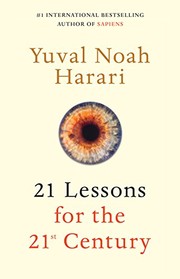
21 Lessons for the 21st Century
Yuval Noah Harari
Algorithms to Live By
Brian Christian
Antifragile
Nassim Taleb
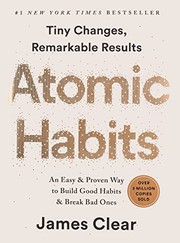
Atomic Habits
James Clear
Authentic Happiness
Martin E. P. Seligman
Behave
Robert Sapolsky
Creativity, Inc.: Overcoming the Unseen Forces That Stand in the Way of True Inspiration
Ed Catmull
Decisive: How to Make Better Choices in Life and Work
Chip Heath and Dan Heath

Enlightenment Now
Steven Pinker
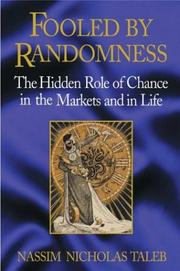
Fooled by randomness
Nassim Nicholas Taleb
Give and Take
Adam Grant
Homo Deus: A Brief History of Tomorrow
Yuval Noah Harari
Judgment in Managerial Decision Making
Max H. Bazerman
Life 3.0
Max Tegmark
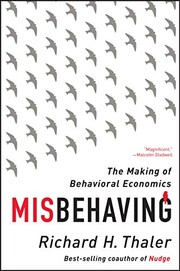
Misbehaving
Richard H. Thaler
Never Split the Difference
Chris Voss
Nudge
Richard H. Thaler
Originals
Adam Grant
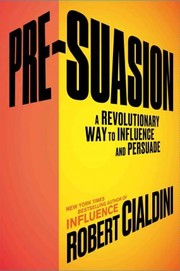
Pre-Suasion
Robert Cialdini
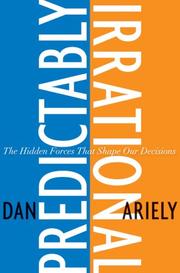
Predictably Irrational
Dan Ariely
Principles: Life and Work
Ray Dalio
Quasi Rational Economics
Richard H. Thaler
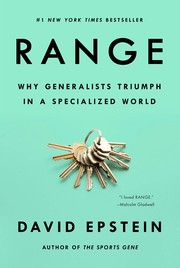
Range
David Epstein
Smarter Faster Better
Charles Duhigg
Showing 24 of 39 books