Author
John Maynard Keynes
1 book in the library · referenced in 19 books
Explore John Maynard Keynes's worksBooks by John Maynard Keynes
Showing 1 of 1 books
Books John Maynard Keynes mentions & references
- Explore
PhysiocracyFrançois QuesnayMentioned in 2 of their booksIn The General Theory of Employment, Interest and Money: Keynes references early macroeconomic flow models like Quesnay's Tableau Économique as precursors to aggregate analysis.In The General Theory of Employment, Interest and Money: Keynes credits Quesnay's Tableau Économique for early insights into the circular flow of income.
- Explore
 Principles of EconomicsAlfred MarshallMentioned in 2 of their booksIn The General Theory of Employment, Interest and Money: Keynes references his mentor's work extensively while refuting Marshallian microeconomic equilibrium in macroeconomics.In The General Theory of Employment, Interest and Money: Keynes builds upon and critiques the microeconomic foundation established by his former teacher.
- Explore
Pure Theory of Foreign TradeAlfred MarshallMentioned in 2 of their booksIn The General Theory of Employment, Interest and Money: Keynes analyzes Marshallian assumptions regarding international trade balances and equilibrium interest rates.In The General Theory of Employment, Interest and Money: Keynes examines Marshall's trade theories in relation to international interest rate differentials and employment.
- Explore
The Theory of UnemploymentA.C. PigouMentioned in 2 of their booksIn The General Theory of Employment, Interest and Money: Keynes uses Pigou's work as the contemporary representative model of the classical theory he seeks to overturn.In The General Theory of Employment, Interest and Money: Keynes directly dissects Pigou's wage-flexibility arguments as a cause of employment fluctuations.
- Explore
 The Wealth of NationsAdam SmithMentioned in 2 of their booksIn The General Theory of Employment, Interest and Money: Keynes critiques Classical economics foundational assumptions established by Adam Smith regarding self-correcting markets.In The General Theory of Employment, Interest and Money: Keynes critiques Classical economic assumptions originating from Smith regarding self-regulating markets and full employment.
- Explore
A Tract on Monetary ReformJohn Maynard KeynesIn The General Theory of Employment, Interest and Money: Keynes builds upon and revises his own earlier views on monetary theory and price stability.
- Explore
 A Treatise on MoneyJohn Maynard KeynesIn The General Theory of Employment, Interest and Money: The General Theory directly develops and corrects the theoretical framework Keynes originally presented in this work.
- Explore
 An Essay on the Principle of PopulationThomas Robert MalthusIn The General Theory of Employment, Interest and Money: Keynes praises Malthus for anticipating the concept of effective demand and underspending.
 CapitalKarl MarxIn The General Theory of Employment, Interest and Money: Keynes briefly acknowledges Marx's observation that production aims at money rather than commodities.Explore
- Explore
 Fable of the BeesBernard MandevilleIn The General Theory of Employment, Interest and Money: Keynes cites Mandeville to illustrate how private saving can paradoxically reduce aggregate economic welfare.
- Explore
Mandeville's Fable of the BeesBernard MandevilleIn The General Theory of Employment, Interest and Money: Keynes praises Mandeville for anticipating the paradox of thrift and the importance of effective demand.
- Explore
Mathematical PsychicsFrancis Ysidro EdgeworthIn The General Theory of Employment, Interest and Money: Keynes cites Edgeworth when discussing utility functions and classical equilibrium models.
- Explore
 Mathematical PsychicsF.Y. EdgeworthIn The General Theory of Employment, Interest and Money: Keynes references Edgeworth when discussing classical theories of utility, interest, and market equilibrium.
- Explore
MoneyD.H. RobertsonIn The General Theory of Employment, Interest and Money: Keynes engages with Robertson's theories on savings, investment, and loanable funds.
- Explore
Principles of Political EconomyDavid RicardoIn The General Theory of Employment, Interest and Money: Keynes identifies Ricardo as the originator of the classical doctrine that supply creates its own demand.
Risk, Uncertainty and ProfitFrank H. KnightIn The General Theory of Employment, Interest and Money: Keynes draws upon distinctions between quantifiable risk and unquantifiable uncertainty in investment decisions.Explore
- Explore
Studies in the Theory of Economic ExpansionErik LindahlIn The General Theory of Employment, Interest and Money: Keynes acknowledges Stockholm School contributions to dynamic macroeconomic expectations and interest rate theory.
- Explore
The Economics of WelfareA.C. PigouIn The General Theory of Employment, Interest and Money: Pigou serves as Keynes's primary contemporary target representing the orthodox Classical theory of employment.
- Explore
The Physiology of IndustryA.F. Mummery and J.A. HobsonIn The General Theory of Employment, Interest and Money: Keynes commends Hobson and Mummery for their early critique of over-saving and under-consumption.
Books that mention & reference John Maynard Keynes

Basic Economics
Thomas Sowell
Capital in the Twenty-First Century
Thomas Piketty
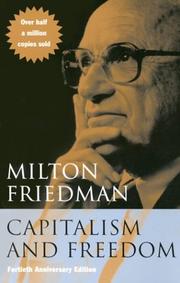
Capitalism and Freedom
Milton Friedman
Common Sense on Mutual Funds
John C. Bogle
Debt: The First 5,000 Years
David Graeber
Economics in One Lesson
Henry Hazlitt

Human Action
Ludwig von Mises
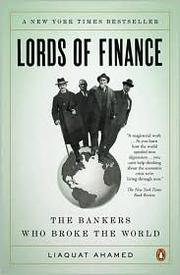
Lords of Finance
Liaquat Ahamed
Man, Economy, and State
Murray N. Rothbard
Manias, Panics, and Crashes
Charles P. Kindleberger

Milton Friedman on Economics
Milton Friedman
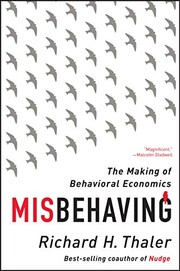
Misbehaving
Richard H. Thaler
The Alchemy of Finance
George Soros
The Great Reckoning
James Dale Davidson and William Rees-Mogg
The Intelligent Investor
Benjamin Graham

The Rise and Decline of Nations
Mancur Olson

The Road to Serfdom
Friedrich A. Hayek
The Stages of Economic Growth
W. W. Rostow

The Worldly Philosophers
Robert L. Heilbroner
Showing 19 of 19 books