Author
Friedrich Nietzsche
2 books in the library · referenced in 15 books
Explore Friedrich Nietzsche's worksBooks by Friedrich Nietzsche
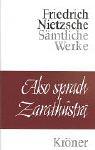
Showing 2 of 2 books
Books Friedrich Nietzsche mentions & references
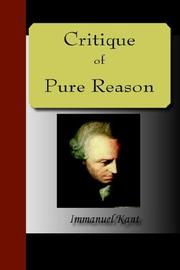 Critique of Pure ReasonImmanuel KantMentioned in 2 of their booksIn Beyond Good and Evil: Nietzsche critically dismantles Kantian synthetic a priori judgments and moral dogmatism.In The Will to Power: Nietzsche critiques Kantian epistemology, rejecting things-in-themselves and synthetic a priori judgments as philosophical fictions.Explore
- Explore
 EthicsBaruch SpinozaMentioned in 2 of their booksIn Beyond Good and Evil: Nietzsche mocks Spinoza's geometric method while engaging with his views on affect and self-preservation.In The Will to Power: Nietzsche examines Spinoza's conatus and rationalism, recognizing a kindred spirit while rejecting his ascetic inclinations.
- Explore
 Meditations on First PhilosophyRené DescartesMentioned in 2 of their booksIn Beyond Good and Evil: He attacks Descartes' premise of the 'cogito' as an unjustified immediate certainty.In The Will to Power: Nietzsche deconstructs the Cartesian cogito, arguing that 'I think' is an unproven grammatical prejudice.
- Explore
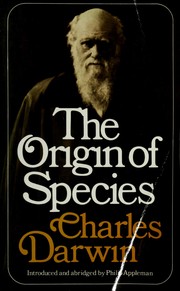 On the Origin of SpeciesCharles DarwinMentioned in 2 of their booksIn Beyond Good and Evil: He rejects Darwinian survival mechanisms in favor of the expansionist will to power.In The Will to Power: Nietzsche challenges Darwinian survival of the fittest, arguing that life seeks power rather than mere self-preservation.
- Explore
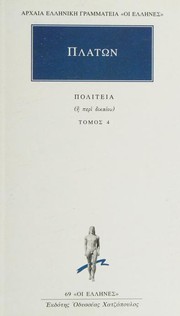 The RepublicPlatoMentioned in 2 of their booksIn Beyond Good and Evil: Platonism is targeted as the foundational European dogmatism and invention of the 'Good in itself.'In The Will to Power: Nietzsche fiercely attacks Platonic idealism and the doctrine of forms as early symptoms of decadence and nihilism.
- Explore
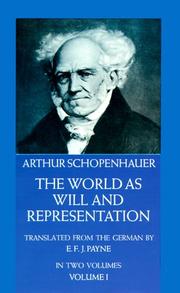 The World as Will and RepresentationArthur SchopenhauerMentioned in 2 of their booksIn Beyond Good and Evil: He critiques Schopenhauer's concept of will and pessimistic moral resignation.In The Will to Power: Nietzsche continuously engages with Schopenhauer's metaphysics of the will, transforming it from denial into affirmation.
- Explore
 First PrinciplesHerbert SpencerIn The Will to Power: Nietzsche critiques Spencer's mechanistic evolutionism and utilitarian ethics as vulgar and physiologically misinformed.
- Explore
 Phenomenology of SpiritG. W. F. HegelIn Beyond Good and Evil: Nietzsche critiques Hegelian historical teleology and dialectical synthesis.
- ExplorePhenomenology of SpiritG.W.F. HegelIn The Will to Power: Nietzsche rejects Hegelian historicism and dialectics as thinly veiled theological optimism.
- Explore
 The PrinceNiccolò MachiavelliIn The Will to Power: Machiavelli's political realism and amoral analysis of power serve as key inspirations for Nietzsche's master morality.
- Explore
 The Social ContractJean-Jacques RousseauIn Beyond Good and Evil: Rousseau's egalitarian ideas are attacked as decadent moral sentimentality.
- Explore
Theoria Philosophiae NaturalisRoger Joseph BoscovichIn Beyond Good and Evil: Nietzsche praises Boscovich for overthrowing material atomism, comparing his achievement to Copernicus.
- Explore
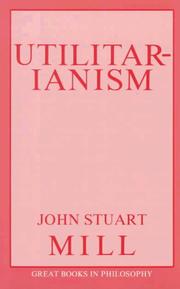 UtilitarianismJohn Stuart MillIn Beyond Good and Evil: Nietzsche attacks English utilitarianism as the vulgar morality of the herd.
Books that mention & reference Friedrich Nietzsche
A Secular Age
Charles Taylor
Debt: The First 5,000 Years
David Graeber

Enlightenment Now
Steven Pinker
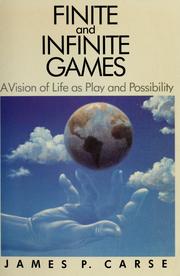
Finite and Infinite Games
James P. Carse
Love and Will
Rollo May
Man's Search for Meaning
Viktor E. Frankl
Shame and Necessity
Bernard Williams
Sources of the Self: The Making of the Modern Identity
Charles Taylor

The 50th Law
50 Cent, Robert Greene
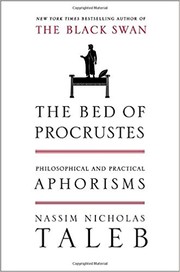
The Bed of Procrustes
Nassim Nicholas Taleb
The Laws of Human Nature
Robert Greene
The master and his emissary
Iain McGilchrist

The Myth of Sisyphus and Other Essays
Albert Camus
The Rebel
Albert Camus

The Will to Meaning
Viktor E. Frankl
Showing 15 of 15 books