Author

Steven Pinker
Steven Arthur Pinker is a Canadian cognitive psychologist, psycholinguist, popular science author, and public intellectual. He is an advocate of evolutionary psychology and the computational theory of mind. Wikipedia
8 books in the library · referenced in 6 books
Explore Steven Pinker's worksBooks by Steven Pinker

Enlightenment Now
Steven Pinker

How the Mind Works
Steven Pinker

The Better Angels of Our Nature
Steven Pinker

The Blank Slate
Steven Pinker
The Language Instinct
Steven Pinker

The Sense of Style
Steven Pinker
The Stuff of Thought
Steven Pinker

When Everyone Knows That Everyone Knows
Steven Pinker
Showing 8 of 8 books
Books Steven Pinker mentions & references
 The Adapted MindJerome H. Barkow, Leda Cosmides, and John ToobyMentioned in 3 of their booksIn How the Mind Works: Provides the foundational evolutionary psychology framework Pinker relies on to explain mental adaptations.In The Blank Slate: Pinker cites this foundational volume of evolutionary psychology to describe the modular architecture of the human mind.In The Language Instinct: Cited as the core foundation for viewing human mental faculties as evolved Darwinian adaptations.Explore
 The Language InstinctSteven PinkerMentioned in 3 of their booksIn How the Mind Works: Referenced by Pinker as his earlier work that demonstrated how one specific mental module operates.In The Stuff of Thought: Referenced as Pinker's earlier work establishing the evolutionary and cognitive basis of grammar.In The Sense of Style: Pinker draws on his earlier linguistic research to explain innate grammar and the psychological roots of language processing.Explore
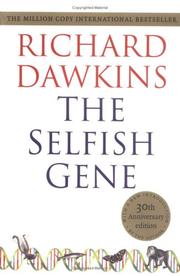 The Selfish GeneRichard DawkinsMentioned in 3 of their booksIn How the Mind Works: Cited extensively to ground psychological mechanisms in gene-level natural selection.In The Language Instinct: Referenced in the context of evolutionary adaptation and natural selection shaping biological organisms.In The Blank Slate: Pinker utilizes Dawkins's gene-centered model of natural selection to explain altruism, kinship, and social conflict.Explore
- Explore
 An Essay Concerning Human UnderstandingJohn LockeMentioned in 2 of their booksIn The Blank Slate: Pinker critiques Locke's premise that the mind begins as a white paper devoid of innate ideas.In The Stuff of Thought: Discussed as the classic empiricist statement on words standing directly for ideas in the mind.
 Darwin's Dangerous IdeaDaniel C. DennettMentioned in 2 of their booksIn How the Mind Works: Referenced to defend adaptationism and the concept of reverse-engineering biological designs.In The Blank Slate: Pinker references Dennett to explore how natural selection dissolves traditional religious and philosophical views of the mind.Explore
- Explore
 Syntactic StructuresNoam ChomskyMentioned in 2 of their booksIn The Stuff of Thought: Referenced in the history of generative grammar and the debate over the independence of syntax from semantics.In The Language Instinct: Cited as the foundational text establishing generative grammar and the premise that syntax is independent of meaning.
- Explore
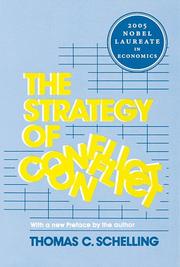 The Strategy of ConflictThomas C. SchellingMentioned in 2 of their booksIn When Everyone Knows That Everyone Knows: Explores focal points, coordination games, and tacit communication underlying shared social knowledge.In The Stuff of Thought: Supplies the game-theoretic models of coordination and mutual knowledge used to explain indirect speech and veiled threats.
- Explore
 The Stuff of Thought: Language as a Window into Human NatureSteven PinkerMentioned in 2 of their booksIn When Everyone Knows That Everyone Knows: Explores indirect speech, plausible deniability, and how people avoid creating mutual knowledge.In The Sense of Style: Referenced by Pinker regarding how cognitive semantics and spatial metaphors shape human prose.
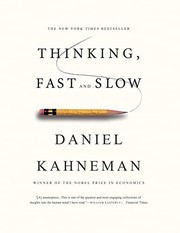 Thinking, Fast and SlowDaniel KahnemanMentioned in 2 of their booksIn Enlightenment Now: Cited to explain cognitive biases, such as the availability heuristic, that predispose people toward unwarranted pessimism.In When Everyone Knows That Everyone Knows: Cited regarding human cognitive biases and how intuitive vs. deliberate reasoning affects social perception.Explore
- Explore
 A Dictionary of Modern English UsageH.W. FowlerIn The Sense of Style: Referenced as a historical touchstone of prescriptivist advice, noted for both its wit and its eccentricities.
- Explore
 American HomicideRandolph RothIn The Better Angels of Our Nature: Provides longitudinal historical data and sociological explanations for the shifting rates of murder in the United States.
- Explore
Aspects of the Theory of SyntaxNoam ChomskyIn The Language Instinct: Cited for defining universal grammar and the distinction between linguistic competence and performance.
- Explore
Clear and Simple as the Truth: Writing Classic ProseFrancis-Noël Thomas and Mark TurnerIn The Sense of Style: Provides the foundational conceptual model of 'classic style' that Pinker advocates for non-fiction writers.
 Consciousness ExplainedDaniel C. DennettIn How the Mind Works: Discussed in relation to dismantling the 'Cartesian Theater' and computational approaches to sentience.Explore
- Explore
 Consilience: The Unity of KnowledgeE. O. WilsonIn The Blank Slate: Pinker supports Wilson's call to synthesize the natural sciences with the social sciences and humanities.
- Explore
Constant Battles: Why We FightSteven A. LeBlanc and Katherine E. RegisterIn The Better Angels of Our Nature: Referenced to show that environmental stresses and resource competition fueled lethal warfare among indigenous populations.
- Explore
Convention: A Philosophical StudyDavid K. LewisIn When Everyone Knows That Everyone Knows: Introduces the philosophical definition and formal analysis of common knowledge in coordinating social conventions.
- Explore
Demonic Males: Apes and the Origins of Human ViolenceRichard Wrangham and Dale PetersonIn The Better Angels of Our Nature: Cited to illustrate evolutionary patterns of male coalitionary violence shared between humans and common chimpanzees.
- Explore
 Discipline and Punish: The Birth of the PrisonMichel FoucaultIn The Better Angels of Our Nature: Challenged as an overly cynical counterpoint that dismisses genuine declines in corporal torture as mere institutional control.
- Explore
 Emile, or On EducationJean-Jacques RousseauIn The Blank Slate: Pinker critiques Rousseau's romantic belief in the natural, uncorrupted innocence of humanity as the root of the Noble Savage myth.
- Explore
 Foundations of Language: Brain, Meaning, Grammar, EvolutionRay JackendoffIn The Stuff of Thought: Cited as a modern synthesis of how syntax, phonology, and semantic concepts interface in the mind.
- Explore
 Garner's Modern American UsageBryan A. GarnerIn The Sense of Style: Cited regularly as a modern, judicious benchmark for standard usage and disputed grammatical conventions.
- How the Mind WorksSteven PinkerIn When Everyone Knows That Everyone Knows: Outlines the evolutionary foundations of human social psychology, social signaling, and theory of mind.Explore
 Human UniversalsDonald E. BrownIn The Blank Slate: Pinker draws heavily on Brown's catalog of pan-cultural traits to disprove the idea of radical cultural plasticity.Explore
- Explore
Interaction Ritual: Essays on Face-to-Face BehaviorErving GoffmanIn The Stuff of Thought: Informs Pinker's analysis of politeness, social face, and why people use innuendo to preserve interpersonal relationships.
- Explore
 Inventing Human Rights: A HistoryLynn HuntIn The Better Angels of Our Nature: Highlights how the spread of literacy and popular novels in the eighteenth century nurtured perspective-taking and empathy.
- Explore
 Language, Thought, and RealityBenjamin Lee WhorfIn The Language Instinct: Extensively discussed and critiqued to dismantle the Sapir-Whorf hypothesis that language constrains human thought.
- Explore
 LeviathanThomas HobbesIn The Better Angels of Our Nature: Articulates the argument that an effective centralized state monopoly on violence reduces the chaotic state of nature.
- Explore
Merriam-Webster's Dictionary of English UsageE. Ward GilmanIn The Sense of Style: Used to provide empirical, historical evidence against unfounded rules invented by pedantic grammarians.
- Explore
Metaphors We Live ByGeorge Lakoff and Mark JohnsonIn The Stuff of Thought: Evaluated and critiqued regarding the extent to which human thought is fundamentally structured by conceptual metaphors.
- Explore
 Micromotives and MacrobehaviorThomas C. SchellingIn When Everyone Knows That Everyone Knows: Examines tipping points and how aggregated individual awareness can suddenly trigger collective shifts.
- Explore
 Naming and NecessitySaul A. KripkeIn The Stuff of Thought: Cited in the discussion of proper names, direct reference, and how words connect to reality without relying purely on descriptive definitions.
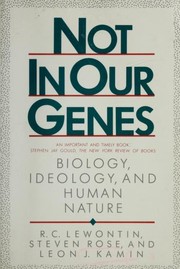 Not in Our GenesRichard Lewontin, Steven Rose, and Leon KaminIn The Blank Slate: Pinker engages this text as a primary counterpoint representing ideological opposition to biological explanations of human behavior.Explore
- Explore
 On the Genealogy of MoralityFriedrich NietzscheIn Enlightenment Now: Critiqued as a primary intellectual source for the Counter-Enlightenment rejection of humanism and egalitarianism.
- Explore
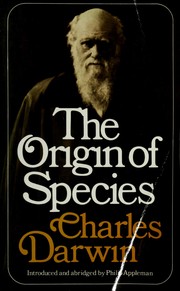 On the Origin of SpeciesCharles DarwinIn How the Mind Works: Cited as the fundamental scientific basis for the theory of natural selection shaping all biological organs, including the mind.
- Explore
 On Writing WellWilliam ZinsserIn The Sense of Style: Mentioned as an exemplar of sound practical advice on rewriting and eliminating clutter in non-fiction.
- Explore
Patterns in the MindRay JackendoffIn The Language Instinct: Cited in discussions of cognitive architecture, universal grammar, and the innate structure of the mind.
- Explore
 Perpetual Peace: A Philosophical SketchImmanuel KantIn The Better Angels of Our Nature: Outlines the foundational trio of republican governance, economic interdependence, and international law that fosters peace.
- Explore
 Philosophical InvestigationsLudwig WittgensteinIn The Stuff of Thought: Referenced for ideas on family resemblance categories and the nature of linguistic meaning as social usage.
- Explore
 Rational Ritual: Culture, Coordination, and Common KnowledgeMichael Suk-Young ChweIn When Everyone Knows That Everyone Knows: Provides the foundational game-theoretic model of common knowledge and public ceremonies that Pinker draws upon.
Books that mention & reference Steven Pinker
Behave
Robert Sapolsky
Consilience: The Unity of Knowledge
Edward O. Wilson
The Dawn of Everything: A New History of Humanity
David Graeber and David Wengrow
The Power of Babel: A Natural History of Language
John McWhorter
The Righteous Mind
Jonathan Haidt
Unweaving the Rainbow
Richard Dawkins
Showing 6 of 6 books